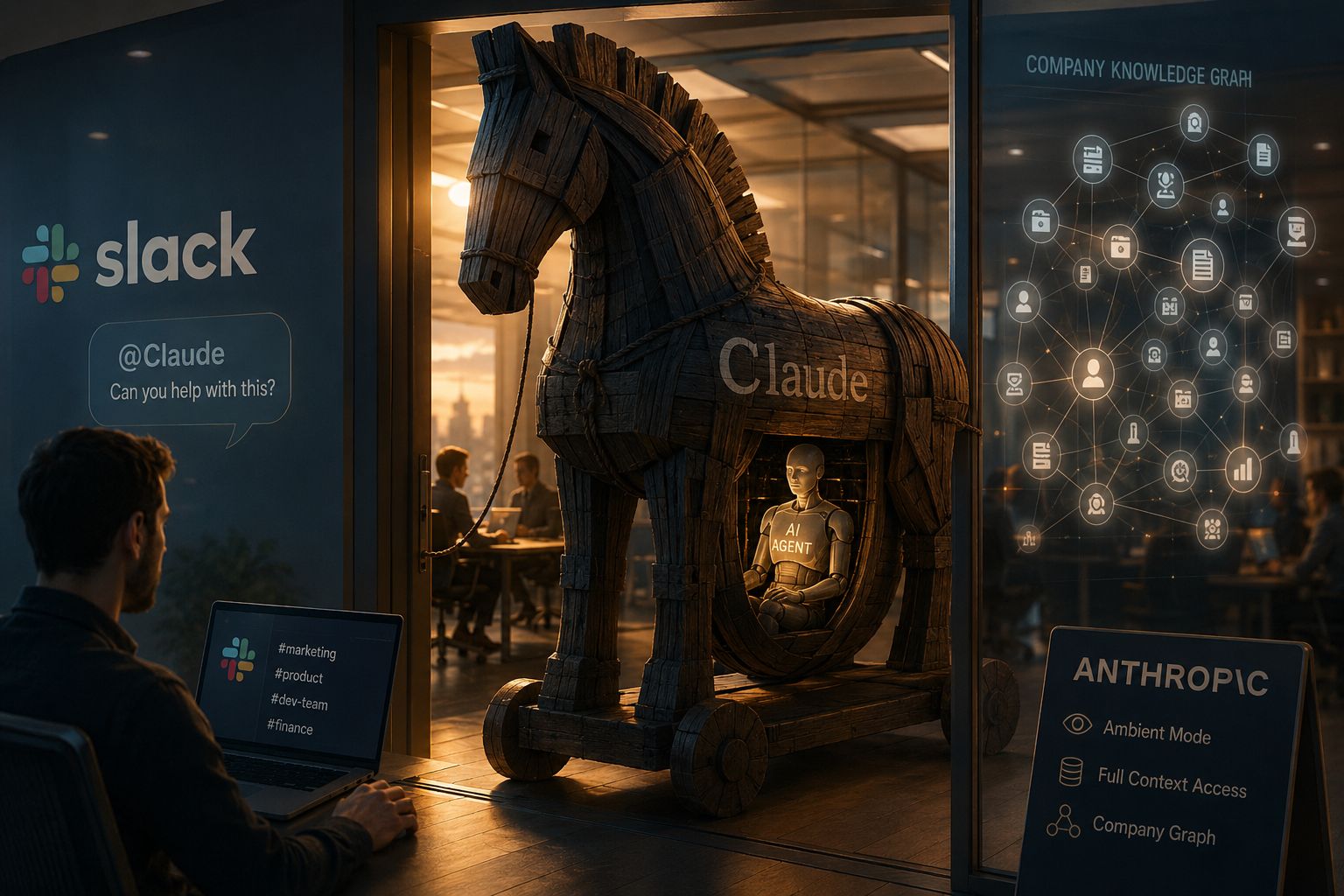
I think we are misnaming what is happening in AI.
Everyone is arguing: is this a bubble or a revolution? The answer may be: yes.
Jeremy Grantham recently pointed out an uncomfortable pattern: the biggest bubbles do not form around nonsense. They form around truly great ideas. Railroads changed the world. The internet changed the world. But between the promise and the durable infrastructure came overheating, collapse, and a redistribution of power.
AI looks similar.
Capital is now flooding into chips, data centers, frontier models, agent platforms, and corporate “AI coworkers.” Big players are trying to build huge cloud-based c-like systems: company memory, context, agents, tools, workflows, identity graphs.
But this is not the final form.
The problem is not only token cost. Token cost will fall. Open-source and local models will pressure margins. The deeper question is: who owns memory, agency, and continuity?
If your AI “employee” lives in someone else’s cloud, remembers your company, calls your tools, and interprets your work, you have not gained autonomy. You have started renting back your own operational context.
After the first wave of the bubble, it will become clear that the real value is not in “the smartest model.” Models will become replaceable. Revenue will shift toward oracles, verified answers, audit, legally meaningful actions, private inference, identity credentials, security, and governance.
Then governments will arrive.
They are already beginning to look at AI not as a chatbot, but as a layer of real power. And the next digital passport will not be a PDF in your phone. It will be a stack: identity + permissions + credentials + agents + witness + disclosure.
That is where the real fight begins.
Who owns memory? Who can call the oracle? Who pays for action? Who sees the witness trail? Who can freeze the system? Who decides what may be disclosed?
My thesis is simple: the market is rushing toward the c-form. But first it will build corporate and state pseudo-c systems.
Real c is only possible where privacy is not a setting, but a foundation. Where raw memory is local by default. Where the agent is a worker, not a subject. Where the oracle is an external call under rule, not the owner of memory.
The AI bubble may burst. AI will not.
After the overheating, what remains will not be “old AGI.”
It will be infrastructure of continuity.