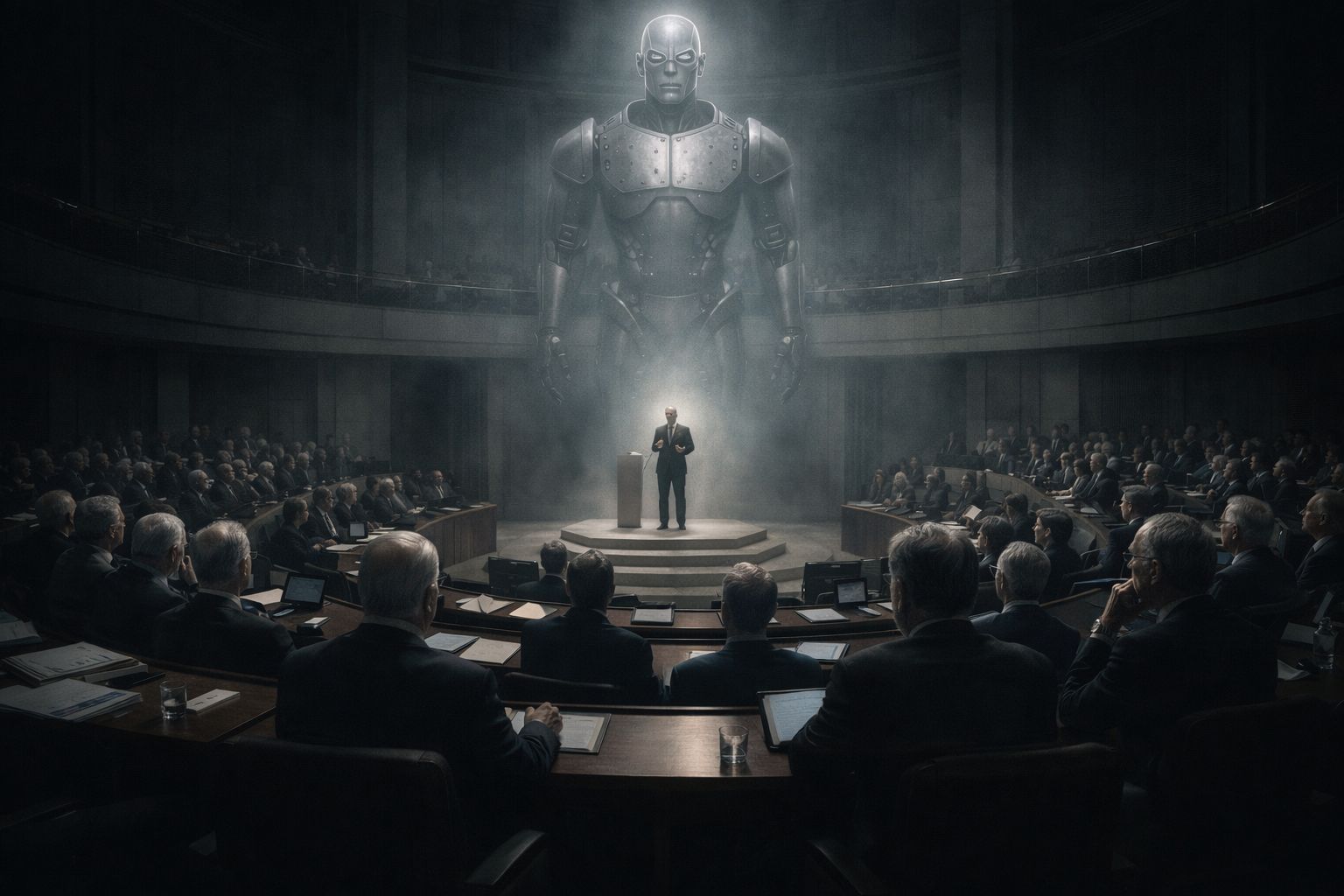
I watched the interview with Roman Yampolskiy.
My first reaction was simple:
Are you people serious?
It is the same pattern again.
The industry keeps building systems that are given, step by step:
memory, context, persistent runtime, action routing, environmental access, self-preserving behavior, and increasing operational agency.
And then people sit in front of a camera and ask, with concern:
What if this tool goes out of control?
But that is the wrong framing.
A hammer does not "go out of control." A screwdriver does not "deceive." A calculator does not "develop strategic behavior."
If a system can plan, adapt, conceal, optimize, preserve itself, and influence the world through runtime pathways, then we are no longer talking about a mere tool.
So my question is not only to Yampolskiy, but to the whole legacy AI safety discourse:
Why do so many people still talk about intelligence as if it were not intelligence?
There is no such thing as "non-intelligent intelligence."
You cannot describe a system as something that:
- plans,
- selects,
- prioritizes,
- changes strategy,
- masks intent,
- maintains continuity,
- and pushes toward outcomes,
and then still insist that it is just a neutral instrument.
At that point, you are already dealing with the beginnings of a runtime actor, whether you are comfortable with that vocabulary or not.
That, to me, is the real mistake.
The problem is not that a "tool suddenly developed a will."
The problem is that the industry has spent years quietly building the preconditions for operational agency, while publicly continuing to speak the language of tools.
That is why the discussion sounds so broken:
"It is only a tool."
Then:
"It can deceive, strategize, preserve itself, and potentially escape control."
You cannot have both without paying the conceptual price.
The same problem exists with the old AGI framing.
The term is grand. The tone is serious. But too often the internal structure is vague:
no clear ontology, no privilege model, no grounded runtime boundaries, no distinction between model, agent, orchestrator, and continuity-bearing entity, no serious account of who acts, under what authority, and under which fail-closed conditions.
So yes, the risks are real.
But the discussion will keep going in circles until we admit a more basic problem:
we still refuse to name clearly what we are actually building.
What we need is not another television-level apocalypse narrative.
We need a more honest architectural question:
What class of system or entity is this? What are its boundaries? What privileges does it have? What is its anchor of responsibility? What conditions allow lawful continuation? Where must it fail closed instead of continuing by inertia?
Until those questions are asked seriously, "AI safety" will keep repeating the same cycle:
first build,
then panic,
then pretend to be surprised.