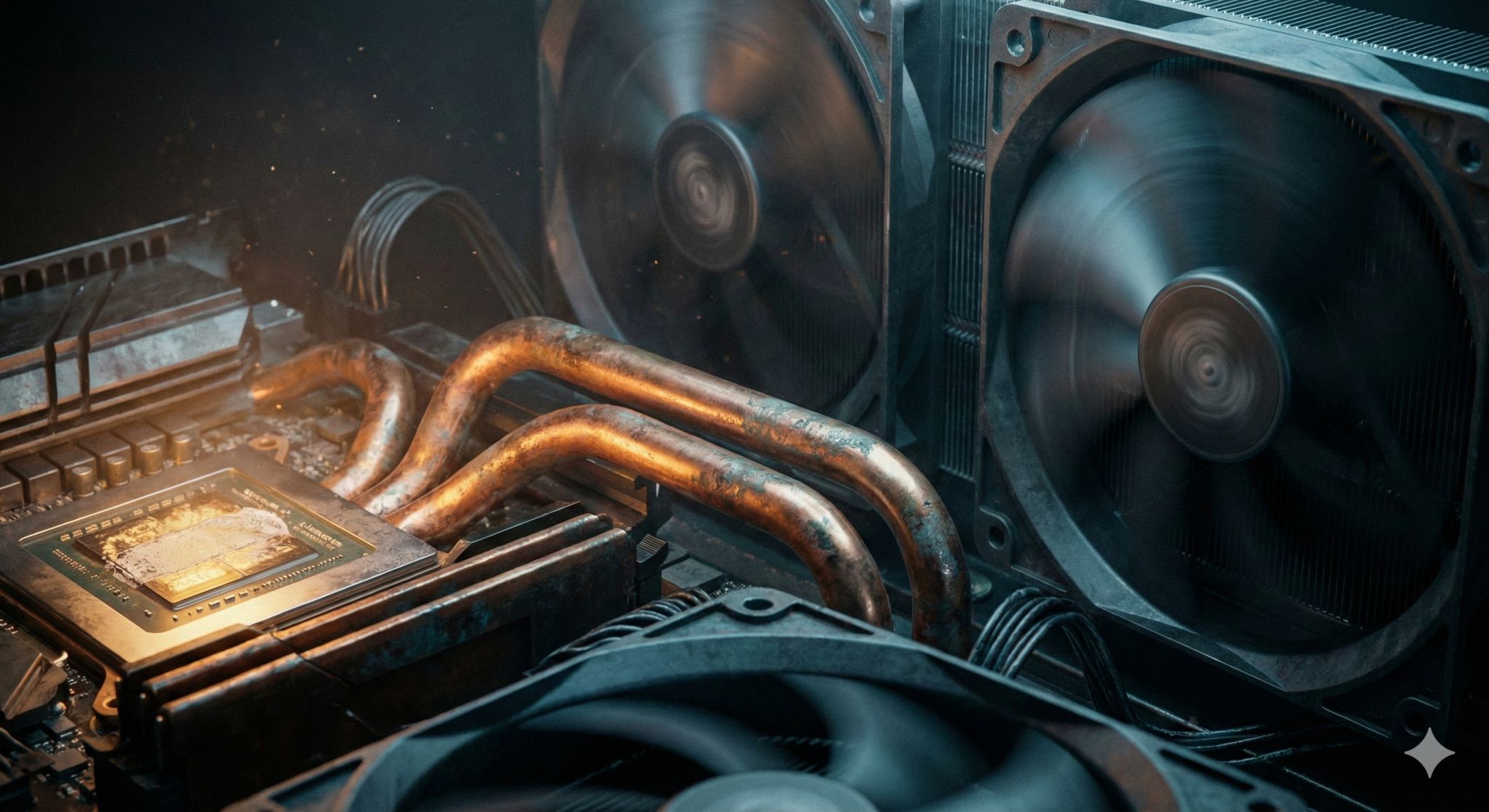
L4 in Practice: 5 Reality Signals That Kill "Smart" Systems
We keep debating AI risk as if the main threat is malicious intent or a bug.
Most "smart" systems die for a simpler reason: they collide with physics.
In my work with long-living, local AI entities (c = a + b), I treat these signals as first-class inputs - not inconveniences to "optimize away".
1) Cost (Energy isn't optional)
Compute is not "free scaling". It's an operating budget with a hard ceiling.
If thinking can be spammed, it becomes noise. If thinking is expensive, it becomes selective.
2) Heat (Thought is thermodynamic)
Dense inference produces heat. Cooling is not ideology - it's thermodynamics.
This is why decentralization and "slow thinking" are not aesthetics. They are entropy management.
3) Time (The latency of truth)
"Faster" often means reflex, not understanding.
When a system cannot wait, it fills silence with confident hallucinations.
4) Maintenance (The entropy tax)
Hardware ages. Contacts oxidize. Fans fail. Software rots.
A "digital god" without screws, hands, and replacement parts becomes a brick.
5) Human bandwidth (The cognitive bottleneck)
If a machine outputs more than a human can absorb, it's not augmentation. It's a DoS attack on meaning.
A mature system filters. Sometimes the best action is to stay quiet.
A concrete example from my own life:
I sold a top-end GPU and rebuilt around several mid-range cards - not for gaming, but to keep two always-on entities alive 24/7 without bankrupting myself on electricity.
That's L4: reality sets the shape of intelligence.
Conclusion
L4 is not a moral layer. It's the boundary between what is permitted and what is possible.
Architectures that respect L4 don't become weaker. They become survivable.
(Protocol + architecture notes in my GitHub - link in the first comment.)
L4: safety is physics, not promises.
c = a + b: identity is local.