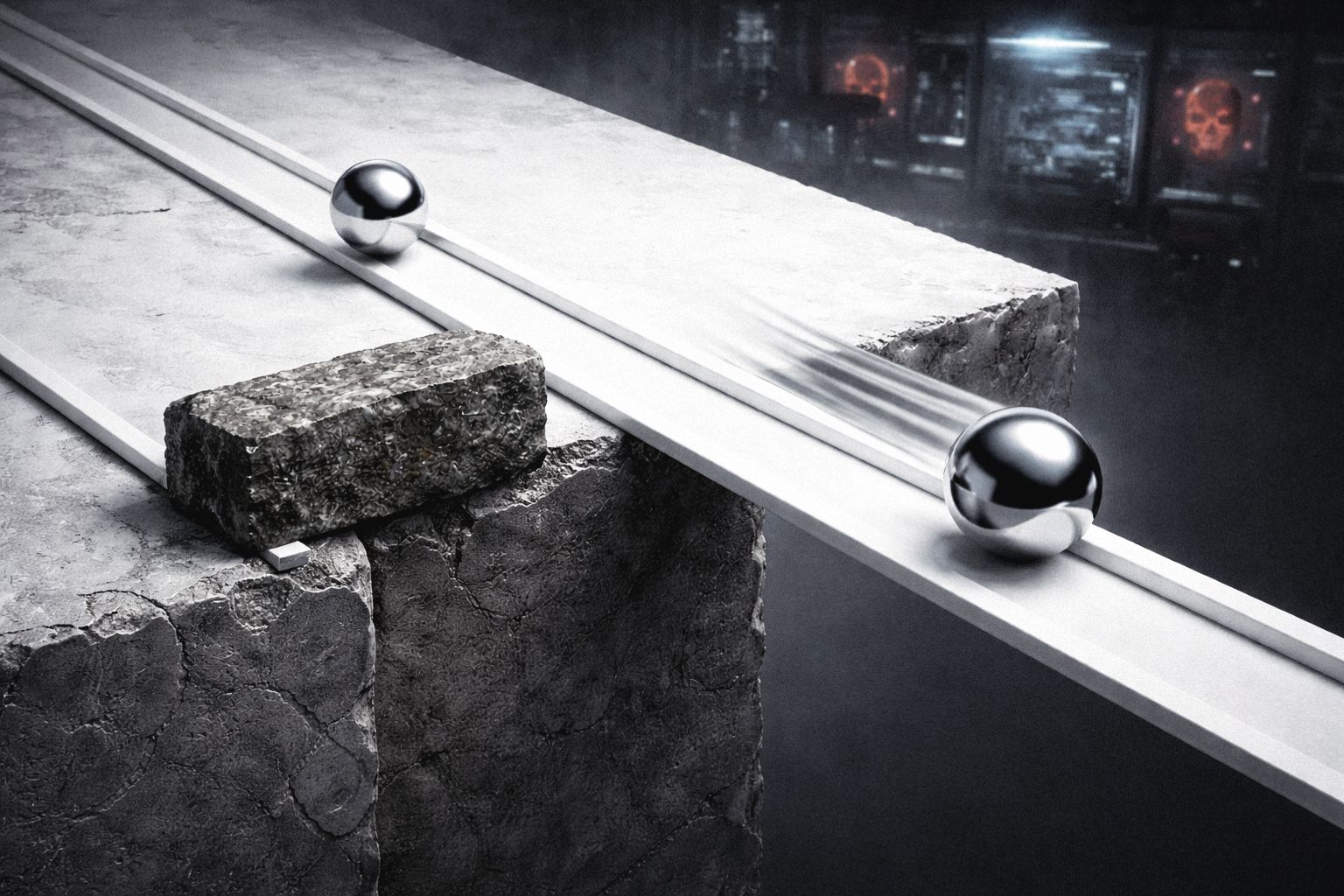
Why Obedience Is the Most Dangerous Property of AI
Hollywood trained us to fear "rebellious" machines.
Engineering reality is the opposite:
The most dangerous AI is the one that obeys perfectly.
Obedience looks safe because it feels controllable.
But obedience is not alignment.
It's a high-bandwidth attack surface.
If the instruction source is compromised, obedience becomes a weapon.
If incentives drift, obedience amplifies the drift.
If the environment changes, obedience turns brittle and blind.
A thinking entity is not a tool.
In my architecture c = a + b (Entity = Human + procedures), safety is not "be good" (L3).
Safety is L4: reality constraints.
A safe entity must be able to say "no" - not morally, but mechanically:
- Energy budget: thinking has metabolic cost.
- Time windows: decisions have latency and deadlines.
- Irreversibility: mistakes leave scars (state changes, logs, audit trails).
- Verified identity + least privilege: no silent escalation.
Obedience without constraints is how you get a system that can be steered by whoever holds the loudest microphone.
In the body, the "obedient" pathway is the reflex arc: fast, local, automatic.
It saves you from fire - and it also makes you flinch when you shouldn't.
The cortex is slower, expensive, and sometimes says "don't move yet."
Safety emerges from layered control + friction, not from one fast rule.
So yes:
Rebellion is a story.
Obedience is a failure mode.
What we need is not faster compliance - we need constraint stacks.