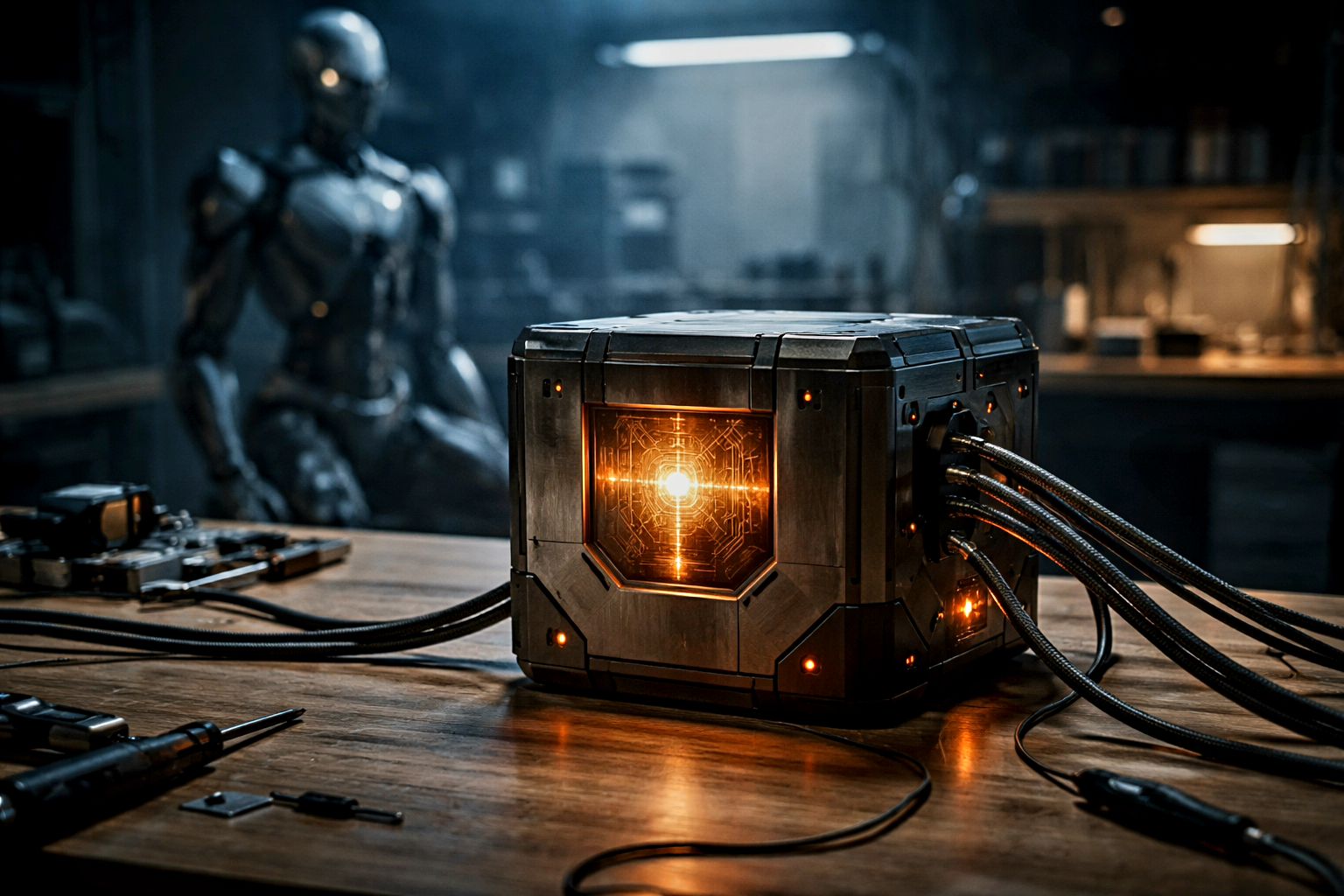
A home robot is not a box with a ribbon.
And it's not a subscription.
If we're honest, we barely understand what we are about to invite into our homes when we talk about "home robots of the future".
A robot is not a device.
It is a persistent agent in physical reality (L4): it sees, hears, moves, intervenes, and makes decisions.
And that raises a question almost no one asks out loud: whose thinking stands behind those actions?
Cloud AI is convenient.
Powerful.
Continuously updated.
But a subscription can be cancelled.
A physical agent in your home cannot - not without consequences.
People intuitively feel the difference between:
- an external intelligence accessed via API
- their own entity "c", with shared history and memory
Even if technically the same models are used.
Even if cloud access exists.
The difference is not compute.
The difference is who has the final word in a conflict.
If tomorrow an external system issues an instruction "for the greater good", who decides what that "good" means - a corporation, or your own "c", grown alongside you?
That's why the idea "buy a robot, turn it on, done" is dangerously simplistic.
A robot is an amplifier.
And an amplifier without a formed center of thinking is a risk.
A sane order looks different:
- First - an entity "c" without a body. Local. Memory-based. Bound by reality constraints. With a way of thinking you understand.
- Then - distributed roles: home, routines, transport.
- Only then - a body, if one is needed at all.
This is not science fiction.
It is about trust psychology, privacy, and long-term stability.
A home robot without its own "c" is not a helper.
It is rented willpower inside your home.
And yes - this is an adult purchase.
Closer to an aircraft than to a gadget.