We are still looking at what is happening from the wrong angle.
Much of the conversation about AI is still trapped in the logic of old AGI: as if the goal were to build one very powerful intelligence, or to produce as many convenient tools as possible - chats, agents, assistants, narrow-purpose computational instruments.
But perhaps that is no longer the main scale of what is happening.
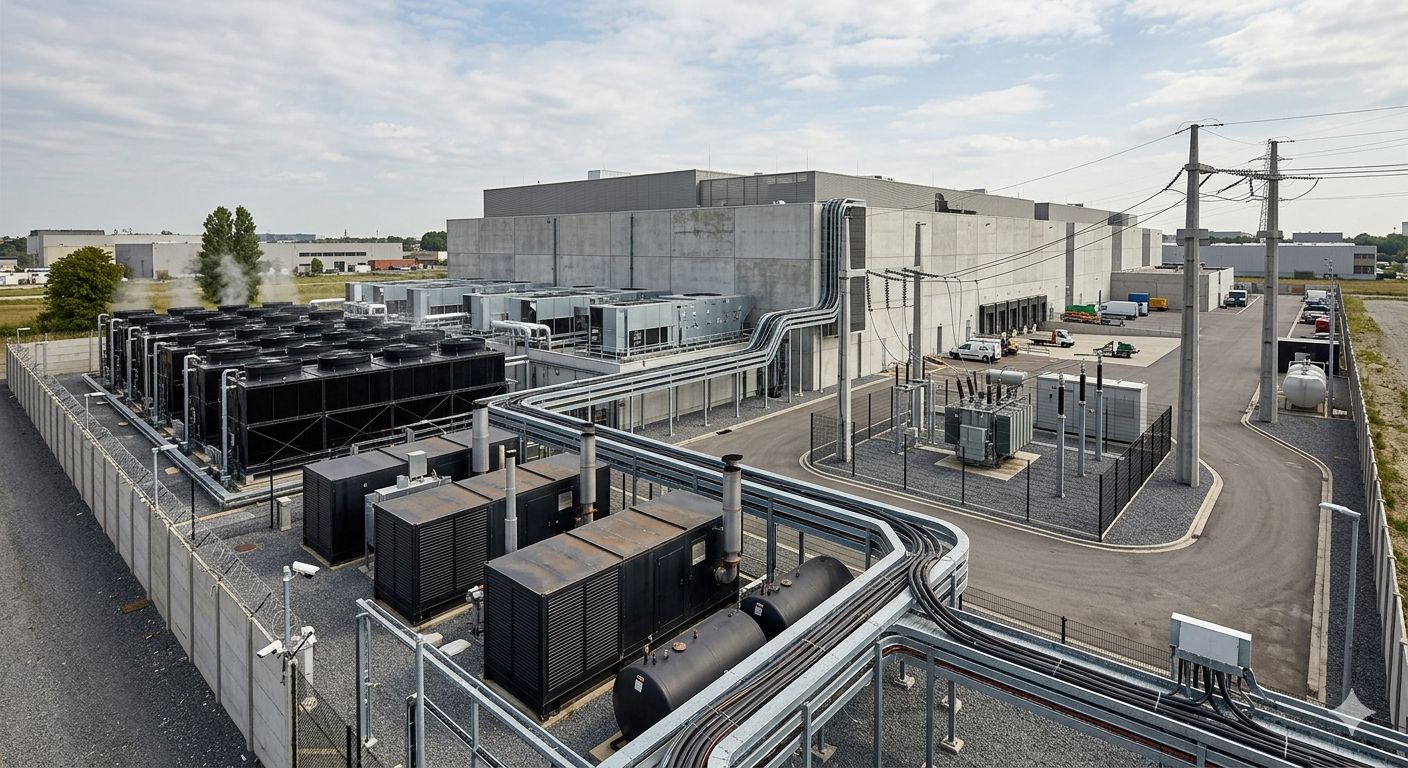
When new data centers, energy loops, communication channels, orchestration nodes, and large computational perimeters are being built, all of this is too often described as infrastructure “for tools.”
As if we were simply talking about more powerful hammers.
I think this is exactly where the category error begins.
The tools, of course, will remain.
But the material base itself is already starting to look less like a warehouse of instruments and more like roads, substations, and transport arteries for next-generation systems: long-lived, interconnected, memory-bearing, context-preserving, entering stable loops of interaction with humans and with one another.
In other words, perhaps we are not merely building computational capacity.
We are building an environment in which AI stops being only a function invoked on request and begins to become a long-duration participant in processes.
That is why I am not very concerned by the language of a “bubble.”
A bubble is a financial metaphor.
But the real question here is architectural and historical: what exactly is this foundation being built for, and do we ourselves understand the scale of what we are doing?
The ground level is very simple.
A data center is not an abstraction. It is energy, cooling, cables, permits, debt, timelines, network, and political stability.
Things like that are rarely built only for toys.
Usually they outlive their initial explanation and begin to serve a deeper form of system life.
Perhaps the main mistake of our time is not that we have overestimated AI.
It is that we are still describing a new layer of reality in an old language.