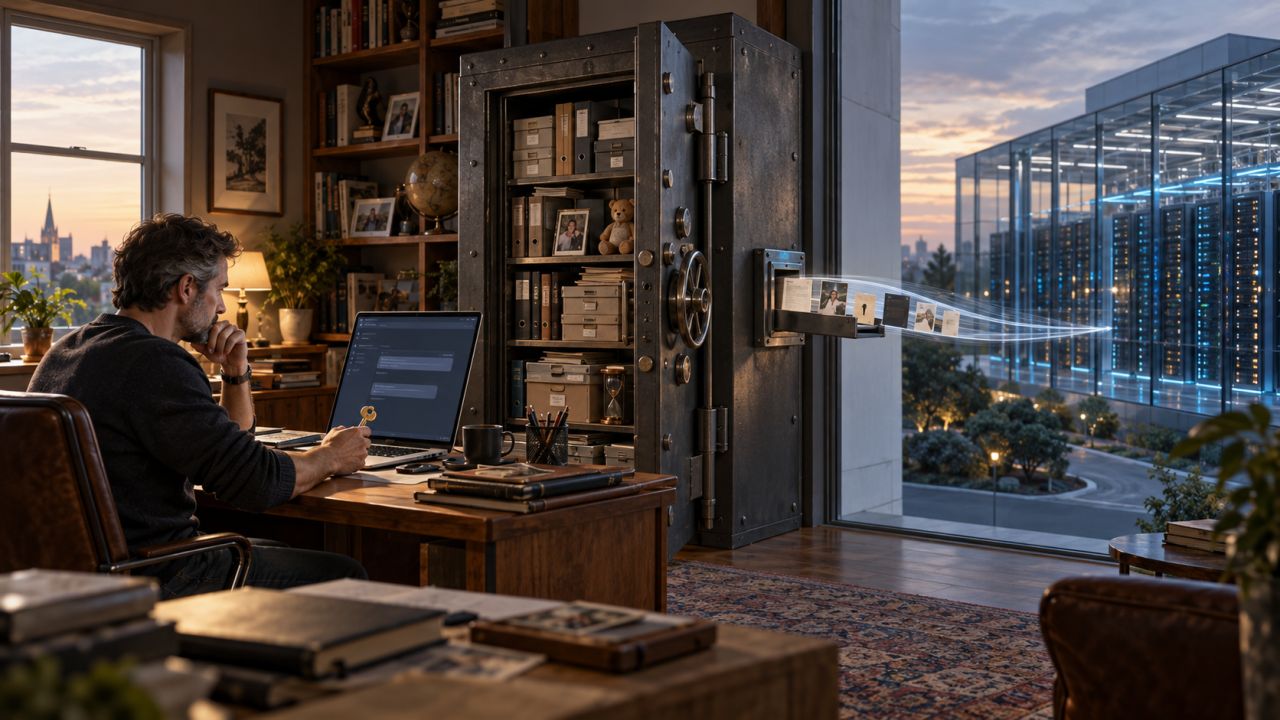
AI AS A CAMERA OF THOUGHT
For years, we learned to live with cameras.
Phones changed parties, clubs, schools, even ordinary conversations. People know that an embarrassing moment can be recorded, copied and resurfaced years later. Awareness of observation changes behaviour.
AI introduces a much deeper version of the same problem.
Social media recorded what we chose to publish.
Search engines recorded what we searched for.
A personal AI can receive something else entirely: the process by which we think.
Doubts.
Family problems.
Half-formed ideas.
Fear.
Money.
Relationships.
Political or moral uncertainty.
Things said at sixteen that a person would be horrified to be judged by at thirty-six.
A useful AI becomes useful precisely because we can think aloud with it.
That creates a structural contradiction.
The better the system knows you, the more valuable it becomes.
But the more intimate history it accumulates outside your control, the harder it becomes to speak freely.
Eventually the problem is not simply privacy. It is self-censorship.
A person who knows that twenty years of internal dialogue may remain available to an external system will begin editing the dialogue before it happens.
That is bad for humans, and ultimately bad for AI.
We need another architecture.
Raw personal history should remain under the custody of the person.
The model can be rented. Compute can be rented. Cloud storage can be used when necessary.
But the authoritative intimate memory, - the long record from which a personal AI understands its human, - should not simply become a corporate asset.
A system can export cleaned experience, abstractions and useful knowledge without exporting the whole private life that produced them.
The future personal AI should not merely remember us.
It should also protect our right to change, forget, contradict our younger selves, and decide what remains private.
The camera moved from the street into the mind.
Architecture now matters.