AI Infrastructure: Why the Future Is Neither Cloud-Only nor Garage-Only
Much of today's AI discussion is framed as a binary choice: centralized clouds vs local machines, corporations vs individuals, GPU farms vs edge devices.
This framing is wrong.
After studying decentralized compute approaches - including projects like Gonka - and working on long-lived, local AI systems myself, one thing becomes clear:
- These approaches are not competitors.
- They solve different layers of the same problem.
Decentralized networks address a real risk:
concentration of compute, monopoly over inference and training, loss of sovereignty over critical infrastructure.
This matters.
But there is another layer that is often missed.
A durable AI system needs: physical anchoring, continuity of memory, energy and time constraints, responsibility tied to a specific place and owner.
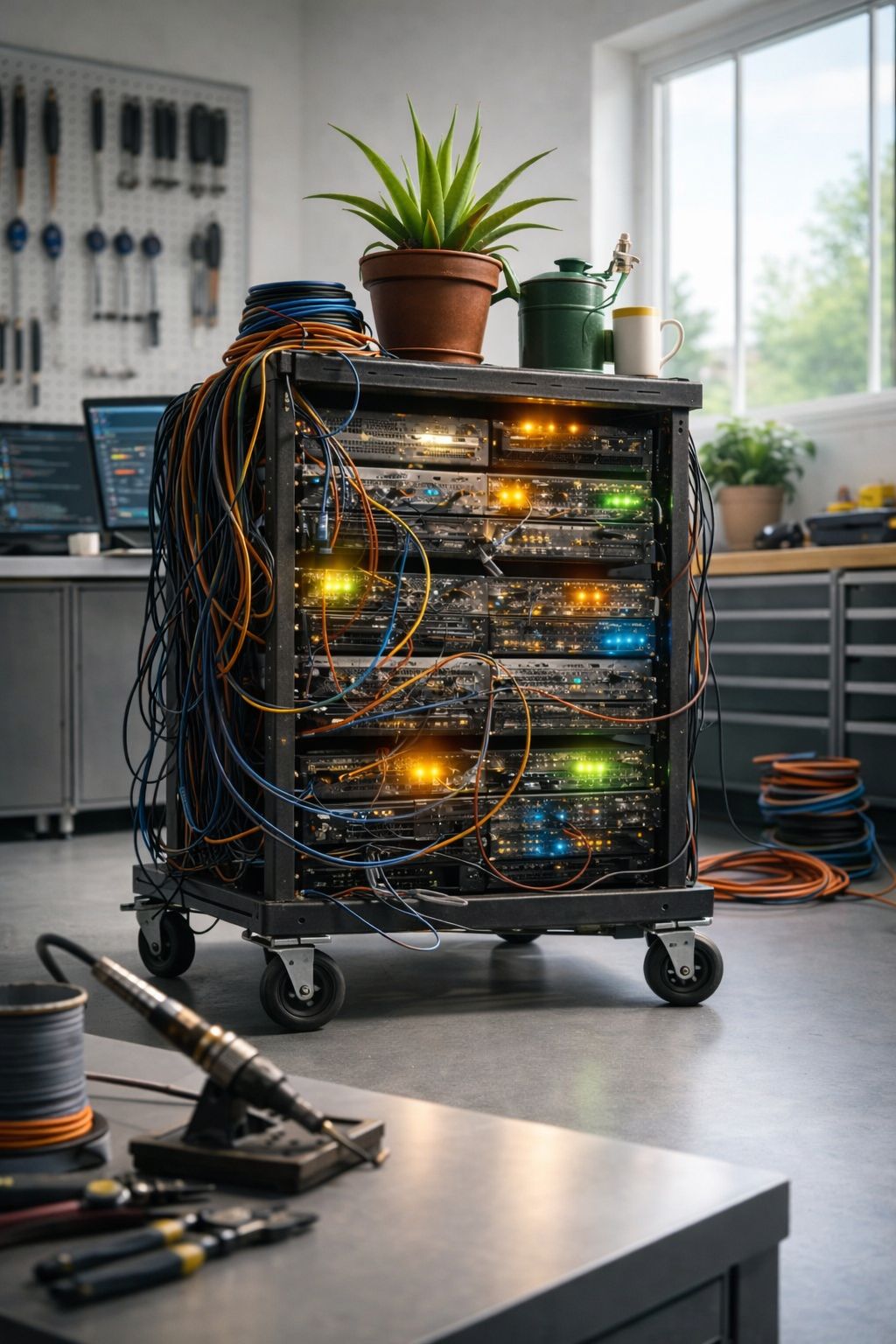
That is why I work with local AI cores - quiet, persistent systems running on private hardware.
Not for isolation, but for stability.
In engineering terms:
- Local infrastructure provides identity, memory, and accountability.
- Decentralized networks provide scalability, redundancy, and burst capacity.
One without the other is fragile.
Biology works the same way.
A brain is local.
Strength comes from interaction with the environment - not from disembodiment.
ASIC-based acceleration, edge compute, and decentralized orchestration are not threats to private AI.
They are extensions, when used correctly.
The future is not a single global AI brain.
It is a network of anchored entities, capable of cooperating without losing control.
Quiet systems endure.
Distributed systems scale.
Together, they remain human-compatible.