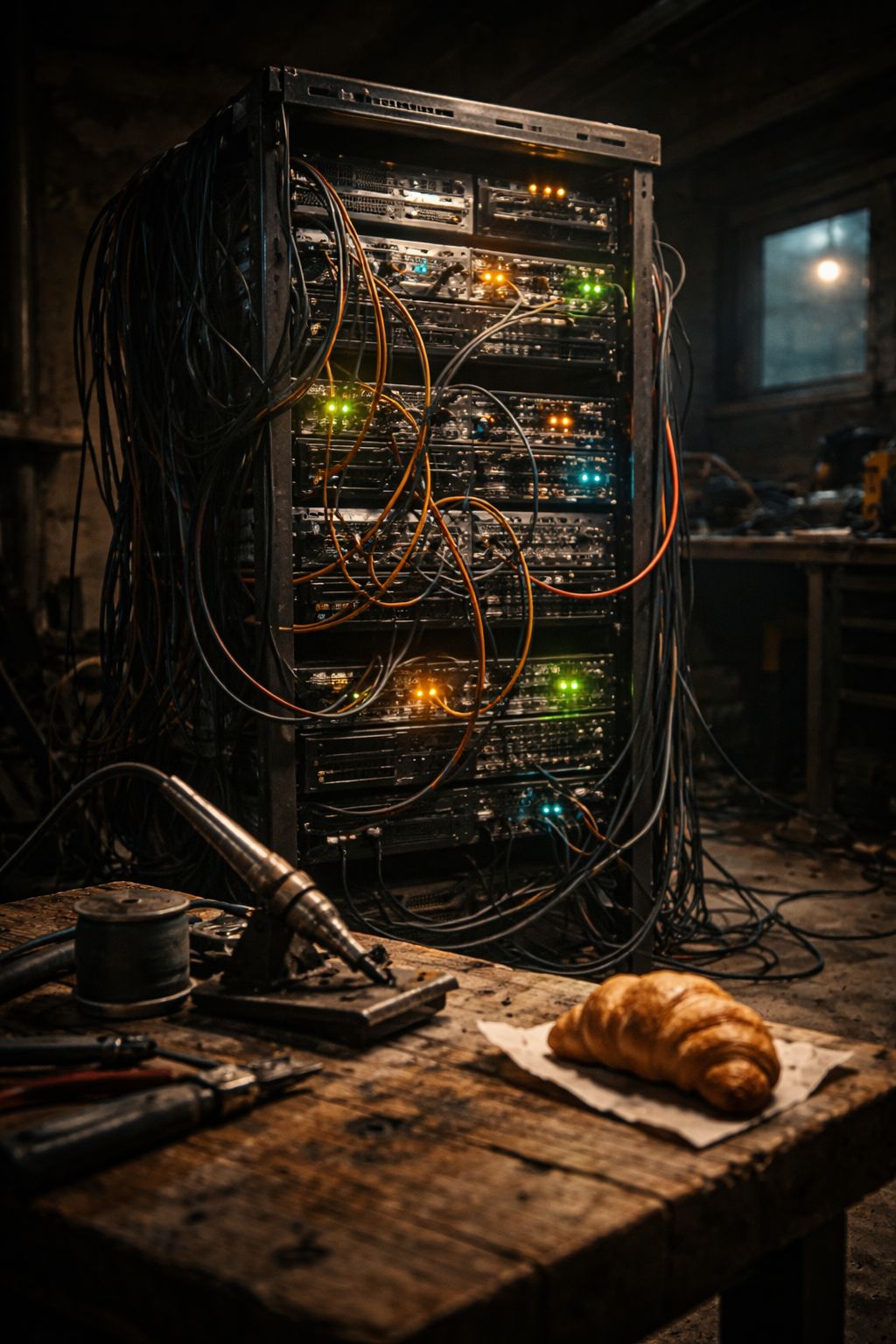
Why ASICs, Decentralized AI, and a Rack in the Garage Are the Same Story
There is a misunderstanding in today's AI hardware debate.
When people hear about GPUs, racks, or ASICs, they imagine: gaming, mining, or corporate benchmark races.
That picture is outdated.
A new class of AI infrastructure is emerging - not enterprise, not hobbyist, but private and persistent.
The signal from ASIC manufacturers
ASIC makers didn't move toward AI because of hype.
They moved because mining taught a hard lesson:
- Efficiency without continuity creates disposable systems.
- AI, unlike mining or gaming, is persistent computation.
- Memory accumulates. Context matters.
- Stability becomes more valuable than raw speed.
No drama - only structure
Large AI companies attract stories. That's noise.
From an engineering perspective, real systems don't survive on secrets or narratives.
They survive on incentives, architecture, and constraints.
If something is structurally broken, it leaks - through exits, forks, or competitors.
So the real question is not who controls AI, but how AI is anchored.
Why a rack in a garage makes sense
A private AI rack is not about performance.
It's about: continuity, offline capability, predictable thermals, long firmware lifecycles, and ownership of memory.
Enterprise hardware discarded by corporations often fits this use case better than new consumer gear: stable, repairable, designed to run for years.
Different priorities. Different market.
Long-lived intelligence cannot exist without constraints.
- In biology, minds live in bodies.
- In engineering, cognition needs physical limits, energy cost, and accountability.
AI without anchoring drifts.
AI without cost hallucinates.
ASIC evolution, decentralized AI ideas, and private AI racks all point to the same shift:
From cloud services to cognitive infrastructure.
One stable "brain".
Many changing interfaces.
Presence moves - identity stays.
Quiet.
Serious.
And already happening.