AI Is Getting Cheaper. But Is Technological Independence?
We keep hearing that AI is becoming cheaper. And in one important sense, it is. Models improve, inference becomes more efficient, and the cost of processing tokens continues to fall.
But something strange is happening on the other side of the equation.
A graphics card that cost around €3,000 in 2025 can now be advertised for €7,000–€8,000. Even midrange hardware has seen extraordinary price increases in some markets.
The same generation of hardware. Essentially the same computing capability. A radically different price.
I have spent much of my life working with computers. I understand what serious engineering costs. But technological progress should not be measured only by how much faster the next machine becomes.
It should also be measured by how much capability an ordinary person can afford to own.
And here we face a larger economic question.
Over recent decades, ownership has increasingly been replaced by recurring payments. Software subscriptions, cloud services, leasing, financing, and access-based business models.
Many are useful. But convenience has a price when it becomes dependency.
AI may accelerate this transition.
The next generation of personal computing will not necessarily be a machine we switch on for a few hours. Personal AI systems may work continuously, maintaining context, processing information, assisting with everyday tasks, and coordinating other devices.
That changes the economics of a home.
Electricity consumption, local computing capacity, solar generation, energy storage, maintenance and network independence become part of the same engineering problem.
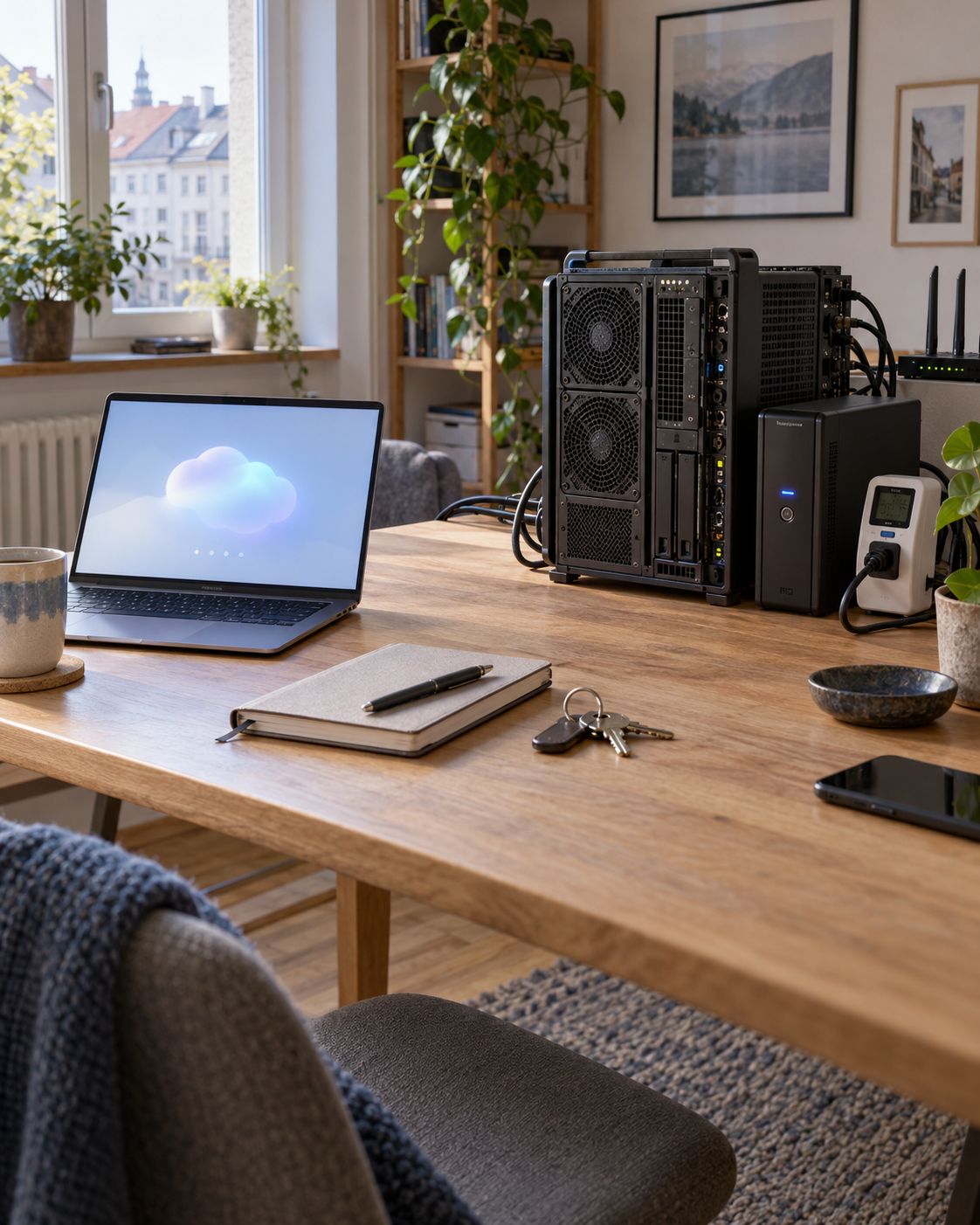
A household with its own AI infrastructure is no longer simply consuming digital services. It is operating a small computing facility.
And that facility should not require the budget of a corporation.
We should absolutely welcome better models, more efficient algorithms and more powerful processors. But we should ask an uncomfortable question:
Who receives the economic benefits of those improvements?
If software becomes ten times more efficient while ordinary people become increasingly dependent on expensive hardware, subscriptions and centralized providers, something important has been lost.
I do not believe cloud services should disappear. Nor do I believe everyone needs a private data centre.
I believe people should retain a meaningful choice.
To rent computing power when it makes sense. To own it when independence matters. To keep their data, equipment and future options under their own control.
The next great achievement in AI may not be another spectacular benchmark.
It may be making powerful personal computing affordable enough that millions of people can genuinely own it.
Progress should increase human capability — and human freedom. Not just recurring revenue.