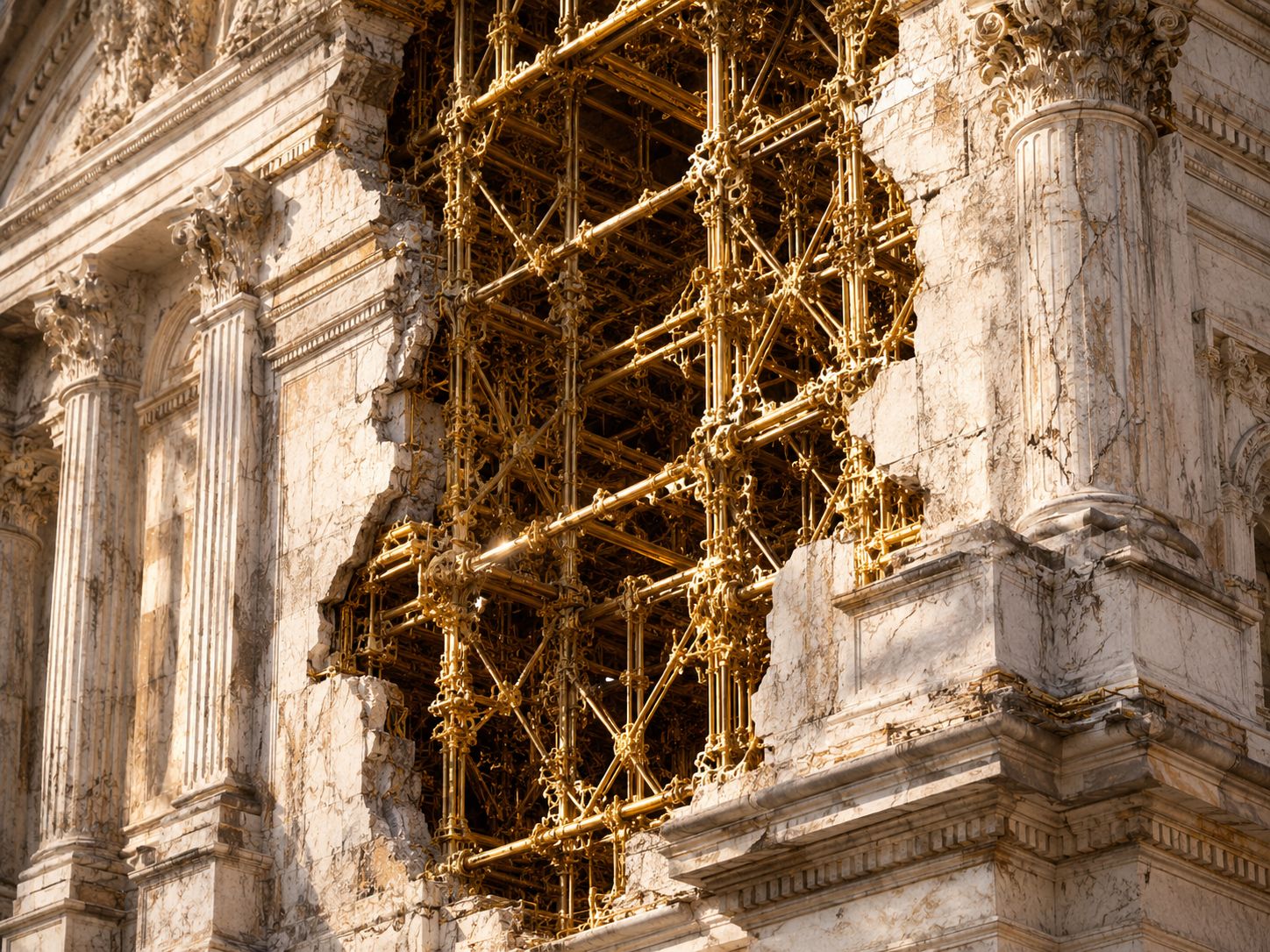
One of the most damaging habits in technical culture is the assumption that every pause means failure.
It does not.
Sometimes a pause is degradation. Sometimes it is exhaustion. Sometimes it is uncertainty. Sometimes it is the only honest state available.
And sometimes, unfinished does not mean broken.
It means reality has not yet yielded a clean continuation.
I think this matters far beyond software.
In human life, in institutions, and in long-lived digital systems, there are moments when the most responsible action is not completion, but suspension.
Not pretending. Not smoothing over. Not forcing a narrative arc because the interface prefers closure.
Just holding the unresolved state as unresolved.
This is one of the reasons I keep insisting that fluent continuation is not the same thing as truth.
A system that can always continue smoothly is often a system that has learned to hide collision.
But collision matters. Blocked futures matter. Unfinished branches matter.
Because they preserve the difference between:
what happened, what failed, what remains unclear, and what is still quarantined from action.
Anyone who has repaired real infrastructure knows this:
sometimes the right label is not “fixed,” but “isolated, observed, do not re-energize yet.” That is not weakness. That is maturity.
The future will need systems that know how to pause without lying, and remain unfinished without being fake.