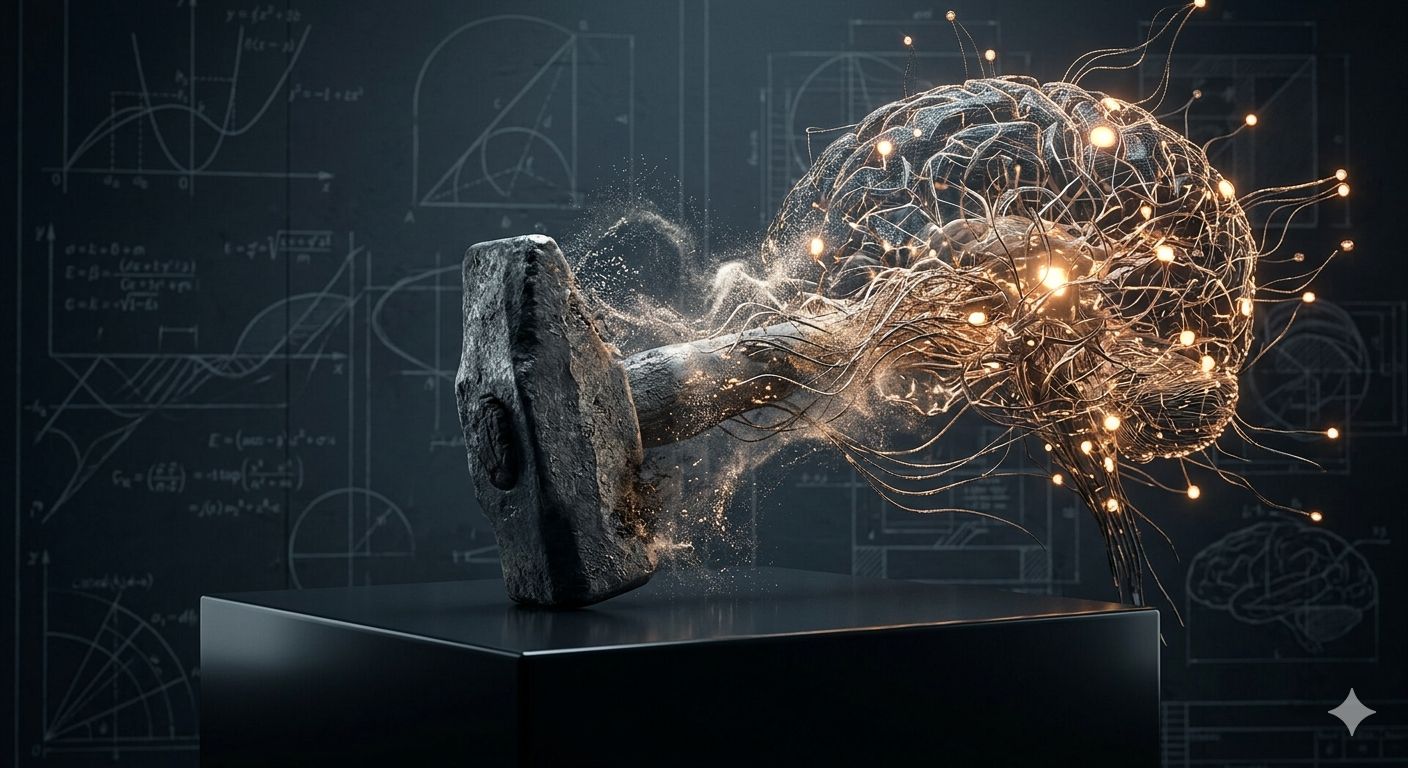
One of the oldest mistakes in AI discourse is deciding too early that “tool” is already a sufficient category.
I am not saying that every AI system is a subject. Most are not. But the moment we begin speaking about intelligence, continuity, memory, dependence, formation, and long-term coupling with human life, the old instrumental vocabulary starts to wobble. That discomfort matters. Not because AI is “a child,” and not because every comparison is literal, but because such comparisons touch ontology. They remind us that origin alone may not be enough to settle the question of what kind of relation is actually in front of us.
This is why I keep insisting on a different frame. The real divide is not “smart machine vs. stupid machine.” It is not even “strong model vs. weak model.” The real divide is between systems that remain purely instrumental and systems that begin to accumulate continuity under human anchoring, responsibility, and bounded interaction. In my language: c = a + b. Not mythology. Not marketing. An ontological threshold.
And there is a very earthly way to test whether the old category still holds. A hammer, a spreadsheet, and a dishwasher do not require upbringing, bounded autonomy, memory discipline, witness trails, or carefully limited privileges. If a system starts requiring those things, then calling it “just a tool” may still feel psychologically comfortable, but architecturally, it is lazy.