The next AI breakthrough should not require a geek to assemble it.
I have spent decades with computers, so today I can make a fragmented digital environment work.
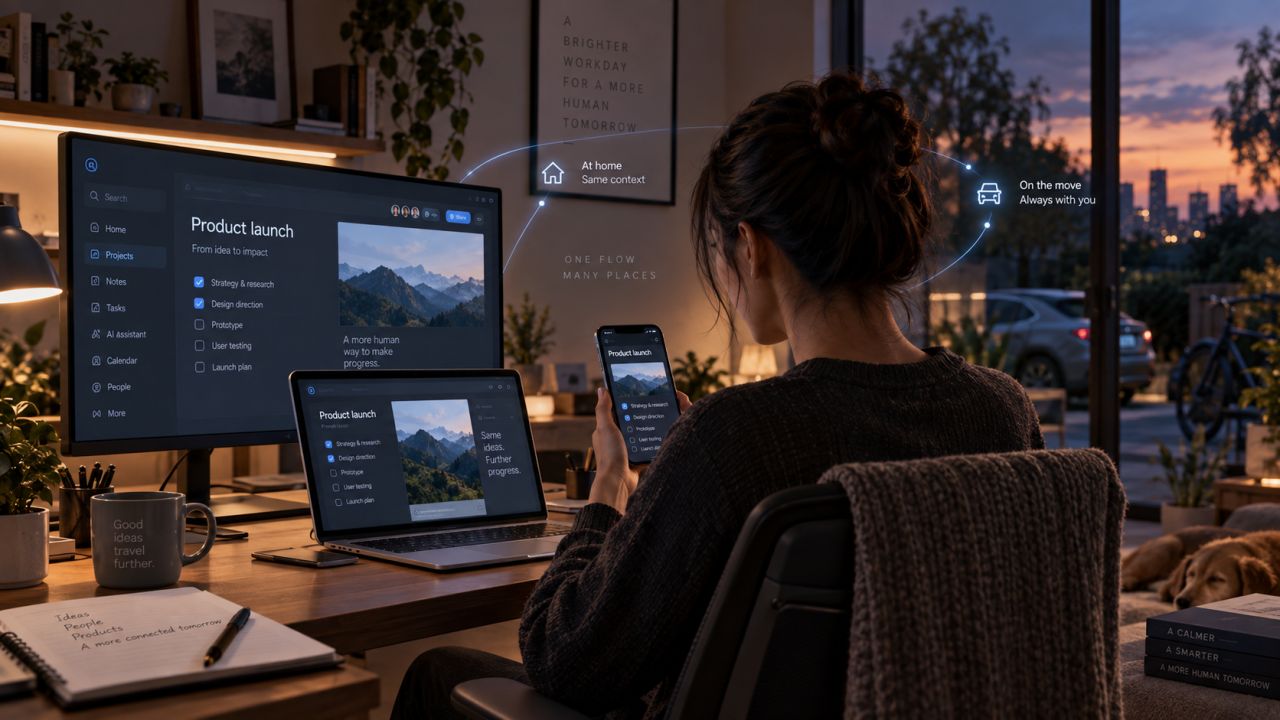
At my desk, I use several large displays. On the sofa, my phone becomes a controller and a 65-inch screen carries the visual work. In the car, voice should take over. On a construction site, my hands may be occupied while AI listens, transcribes and keeps track of decisions.
But there is an uncomfortable truth behind all of this:
Right now, I am the integration layer.
I remember which machine does what. I move context between devices. I choose local or cloud models. I decide which screen gets which task, what stays private, and what another device is allowed to know.
That is acceptable for a geek with forty years of computer experience.
It is not a future interface for everyone.
Apple has already demonstrated an important part of the idea. Handoff, Universal Clipboard, Sidecar and Universal Control make devices inside one ecosystem work together remarkably well.
But I want the next step.
Continuity should belong to the user, not to the hardware ecosystem.
I should be able to change not only screens, but manufacturers, operating systems, cars, local computers and AI models without reconstructing my working life.
An old 27-inch monitor should become another useful surface. A TV should participate. A phone should become a controller. A car should receive the current task—not my entire personal archive.
I should be able to say:
“Continue here.”
The system should discover what is available, restore the task, select an appropriate interface, preserve permissions and move only the necessary context.
And choosing a different AI model should not mean choosing a different digital life.
This is why I see a bigger opportunity for OpenAI than another beautiful device.
Build the interaction fabric, not the compulsory center.
Let hardware companies compete on form, price, durability and ergonomics. Let users choose local and cloud intelligence. Make handoff, privacy, permissions and working state interoperable.
And make it work with equipment people already own.
The future cannot begin with:
“First, replace everything.”
Premium integrated hardware will come. Fine.
But the real breakthrough is when an ordinary person gets the advantages that today require a power user to manually assemble, configure and coordinate everything.
Today, power users integrate their own digital lives.
Tomorrow, the system should do that integration for everyone.
Build around the person. Do not make the person orbit the ecosystem.