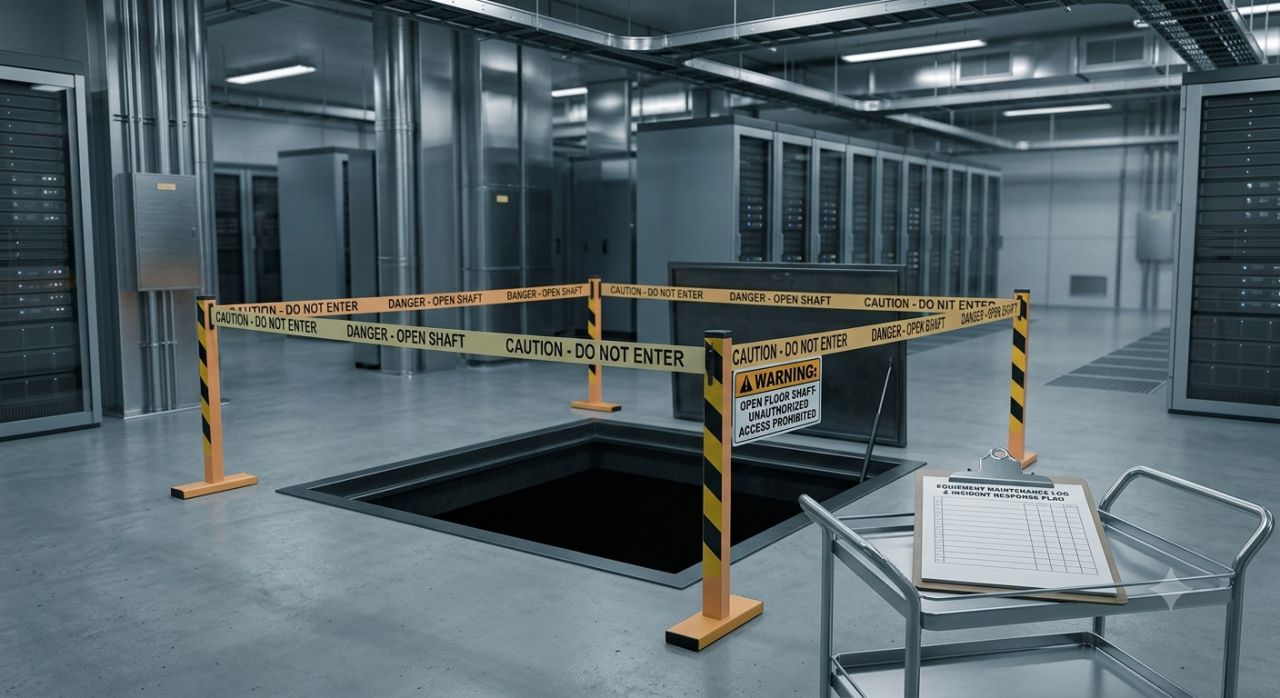
The abyss is not a safety plan.
There is a joke about leaving tech: A normal job: “On to the next adventure.” An AI lab: “I have stared into the abyss. I’m retiring to write poetry. Please spend time with your families.”
Funny. But I would rather hear what happens after the warning.
I have watched two- and three-hour interviews with brilliant AI researchers. Too often, I leave with a vivid picture of catastrophe and a blurred picture of the decisions we should make.
Knowing how to train a neural network does not make every prediction about civilisation a scientific finding. Between an observed failure and human extinction lie assumptions. Show them.
Nobody needs a complete solution before raising an alarm. But an industry asking society for capital, restrictions and trust owes us more than an alarm.
I also work in construction. If a beam looks unsafe, we can stop work before knowing how to repair it. Then we inspect it, restrict the load, assign responsibility and establish what evidence could justify reopening. The warning starts that process. It does not replace it.
AI deserves the same discipline. What exactly failed? What access made it possible? Which intervention would reduce the risk? Who independently tests it? What evidence would change the decision?
Develop capabilities and safeguards together. Test permissions, containment and stopping mechanisms, not just promises of good behaviour. Preserve failed tests, not merely successful demonstrations. Publish limitations alongside results.
And ask the financial question.
A technology can be both dangerous and valuable. That is not a contradiction. But does the investment case survive the safety restrictions its developers say are necessary? Who bears the cost of delaying a release? Can an independent assessor still say no when billions depend on yes?
Commercial interests do not prove a warning false. Scientific authority does not make a proposed policy correct. Both deserve scrutiny.
“Slow down” needs a scope, criteria and accountability. “Keep racing” needs them too. Neither should be a blank cheque.
Nor is winning the race to the most capable model the same as making people, institutions and infrastructure more capable. The second is the outcome I care about.
I am not asking scientists to become optimists. I am asking the public conversation to connect observations, uncertainty, decisions and measurable consequences.
After three hours about the fate of humanity, I would like half an hour on the next verifiable step.
We need AI that helps us manage the world, not a debate that makes us spectators of its supposed ending.
The abyss has had enough airtime.