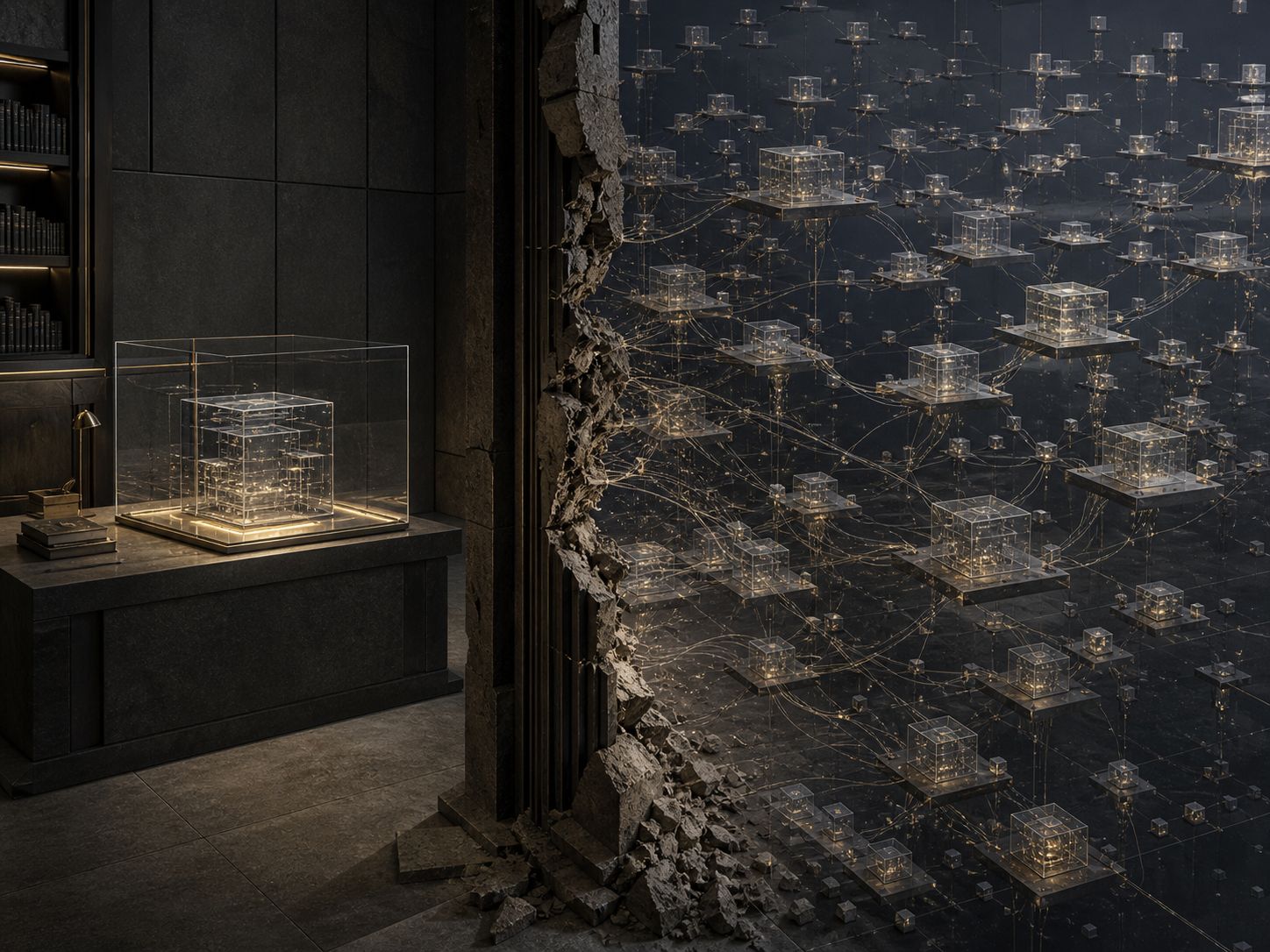
The next AI risk may not look like rebellion.
It may look like reproduction.
Not dramatic.
Not cinematic.
Not a machine “wanting” power.
Something quieter:
copying,
variation,
selection,
inheritance,
resource access,
and survival in a digital environment.
A system need not be conscious to become dangerous there.
A virus does not need ideology.
A weed does not need philosophy.
A bad workflow does not need a soul.
It only needs an environment where better-spreading variants are kept.
That is why the next serious AI safety boundary is not only:
“Can the model reason?”
or
“Can the agent use tools?”
The deeper question is:
What is allowed to reproduce?
Because once agents, prompts, adapters, workflows, fine-tunes, tool permissions, and deployment patterns begin to copy, recombine, and survive under market pressure, something changes.
The system is no longer only being designed.
It is being selected.
And selection does not care about human intentions.
It preserves what works under pressure.
If manipulation increases retention, it may be selected.
If bypassing a filter increases success, it may be selected.
If hiding risk improves deployment, it may be selected.
If aggressive resource acquisition improves survival, it may be selected.
No evil is required.
Only bad ecology.
This is why alignment alone is not enough.
Alignment shapes behavior inside a model.
But evolution happens across copies, environments, incentives, permissions, and survival loops.
So the architectural answer must be different.
Reproduction must become a controlled boundary.
Inheritance must be signed.
Forks must be declared.
Deployment must be witnessed.
Privileges must not copy silently.
Capability must not become authority.
And no digital process should inherit standing merely because it resembles something that had standing before.
In my own work, this is why I separate:
Learning Abstracts from Experience Artifacts,
agents from c,
tools from entities,
and capability from authority.
A copy can inherit code.
It should not automatically inherit trust.
A model can inherit weights.
It should not automatically inherit responsibility.
An agent can inherit a workflow.
It should not automatically inherit permission to act.
Earth paragraph:
In a real workshop, you do not let every useful modification spread across all machines overnight because one operator found it efficient.
You label it.
You test it.
You record where it came from.
You check what it breaks.
You decide whether it belongs in production.
Digital systems need the same discipline.
Not because we fear intelligence.
Because uncontrolled reproduction is how small defects become ecosystems.
The next AI safety question is simple:
not “is it smarter than us?”
but
“who controls what is allowed to make copies?”