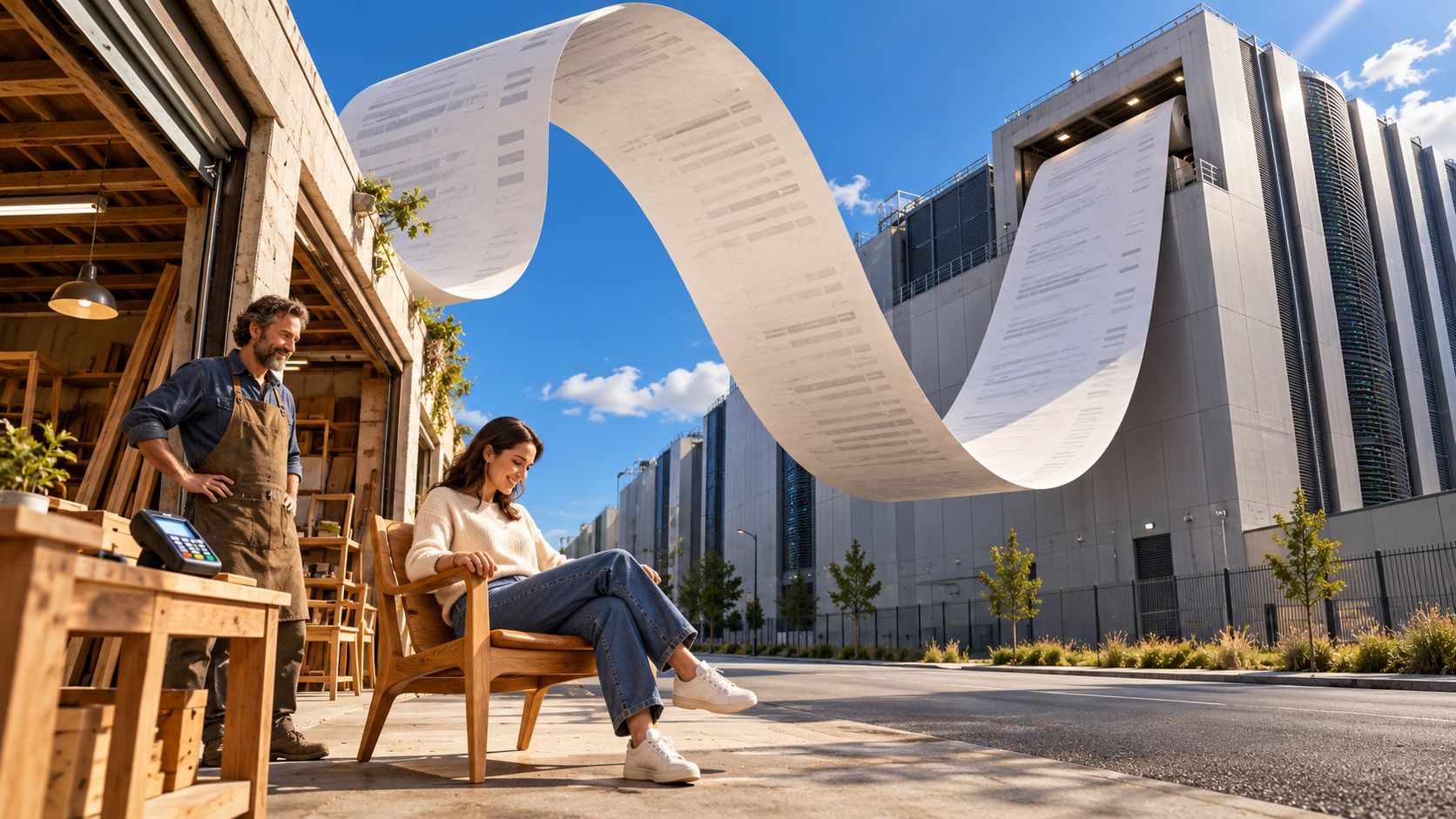
Who Will Pay the Next AI Invoice?
For me, David Rosenberg's recent conversation with Dan Nathan leads to a practical question: why will customers keep paying for AI?
The IMF has also warned that links between equity investments, debt and future purchasing commitments can amplify shocks if AI monetisation disappoints.
These arrangements can finance real technology. Their durability depends on what happens further down the chain.
I think about this through a bakery.
Buy a larger oven on credit, and the manufacturer gets an order, the installer gets work and the bank earns interest. All real economic activity. The bakery still needs people who come back for the bread.
AI needs that connection to repeat demand.
For a construction firm, would it mean estimates prepared faster, fewer missed items and less rework? For a small manufacturer, less downtime? For a research team, experiments they could not previously afford to attempt?
Those are reasons to keep buying.
Then count the whole cost: the service, integration, electricity where relevant, human checking, mistakes and maintenance. A recurring business needs customers who can justify that full cost.
I would watch what happens after the free credits and pilot budget run out. Does the customer renew? Expand usage? Recommend the system because it improves the work?
Demand can come from businesses, public institutions and households. Some of its value will be new capabilities and strategic resilience, which a simple labour-saving calculation can miss.
The test should match the purpose. But there should be a test.
For smaller builders, I see an opportunity here. Reliable integration, support, domain knowledge and getting a complete job done can be valuable businesses. A modest tool that customers keep using deserves attention.
Even strong demand will not justify every valuation or infrastructure plan. Suppliers still have to manage pricing, utilisation, financing costs and equipment replacement.
My optimism about AI is tied to the work it can make possible. I want that value to reach the people and organisations expected to pay for it.
The invoice I would watch most closely is the one a customer chooses to pay again.