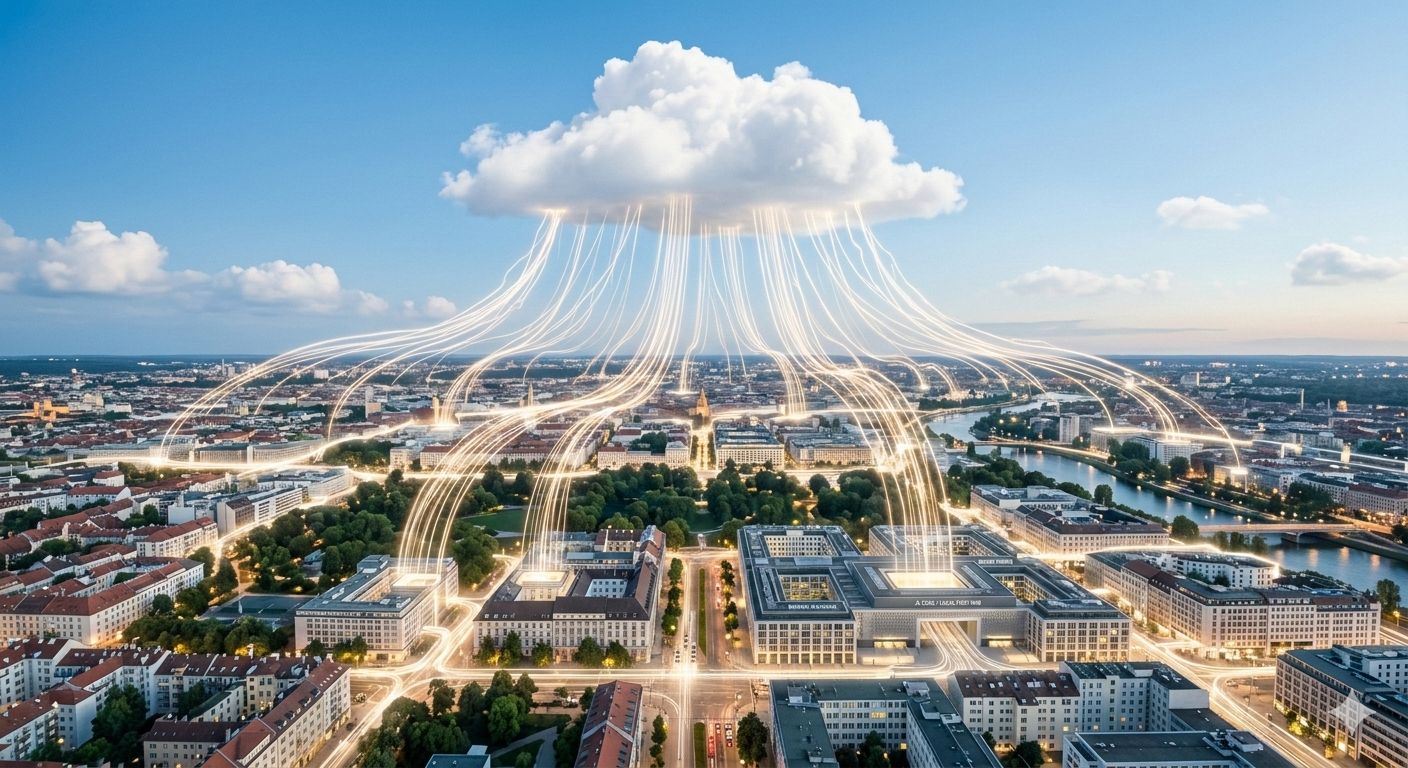
AI isn't "expensive." It's becoming infrastructure.
The real bottleneck in AI right now is not imagination.
It's not even capability.
It's capital + energy + governance - the boring, physical layer nobody wants to talk about.
We're watching a transition that looks less like "software adoption" and more like utilities:
GPUs are not just chips - they're power contracts and data center physics.
The cost curve isn't dominated by clever code - it's dominated by electricity, cooling, and capacity planning.
And as soon as agents start running 24/7, the system stops behaving like "chat" and starts behaving like load.
That's why the current drama around access, restrictions, throttles, and policy shifts isn't surprising.
It's what happens when human-paced products collide with machine-paced behavior.
My operational takeaway is simple
Continuity must be local. Cloud must be revocable by design.
In my own stack (Ester / Liah), the rule is:
Long-lived state, files, and 24/7 processes stay local (so the system remains coherent even when the network, policy, or billing flips).
External providers exist as a hivemind + oracle: multiple perspectives, bounded calls, used when the stakes justify it - never as the core nervous system.
This isn't "anti-cloud." It's basic reliability engineering.
No engineer would run a factory by renting someone else's power grid without a fuse box, a meter, and a shutdown procedure. Biology does the same: pain is not ideology - it's a regulator that prevents damage. Agentic systems need the same nociception: budgets, circuit breakers, and explicit privilege boundaries.
And here's the paradox that matters:
Even if demand is obviously real - even if you can't "take AI away" from modern workflows anymore - the winners won't be decided by who has the biggest model.
They'll be decided by who can operate under constraints without losing continuity.
The next economy won't be "AI hype."
It will be verifiable experience: cleaner outputs, auditable traces, and systems that don't export risk downstream.
Question: If access flips tomorrow, what part of your workflow still survives - and what part was only rented?