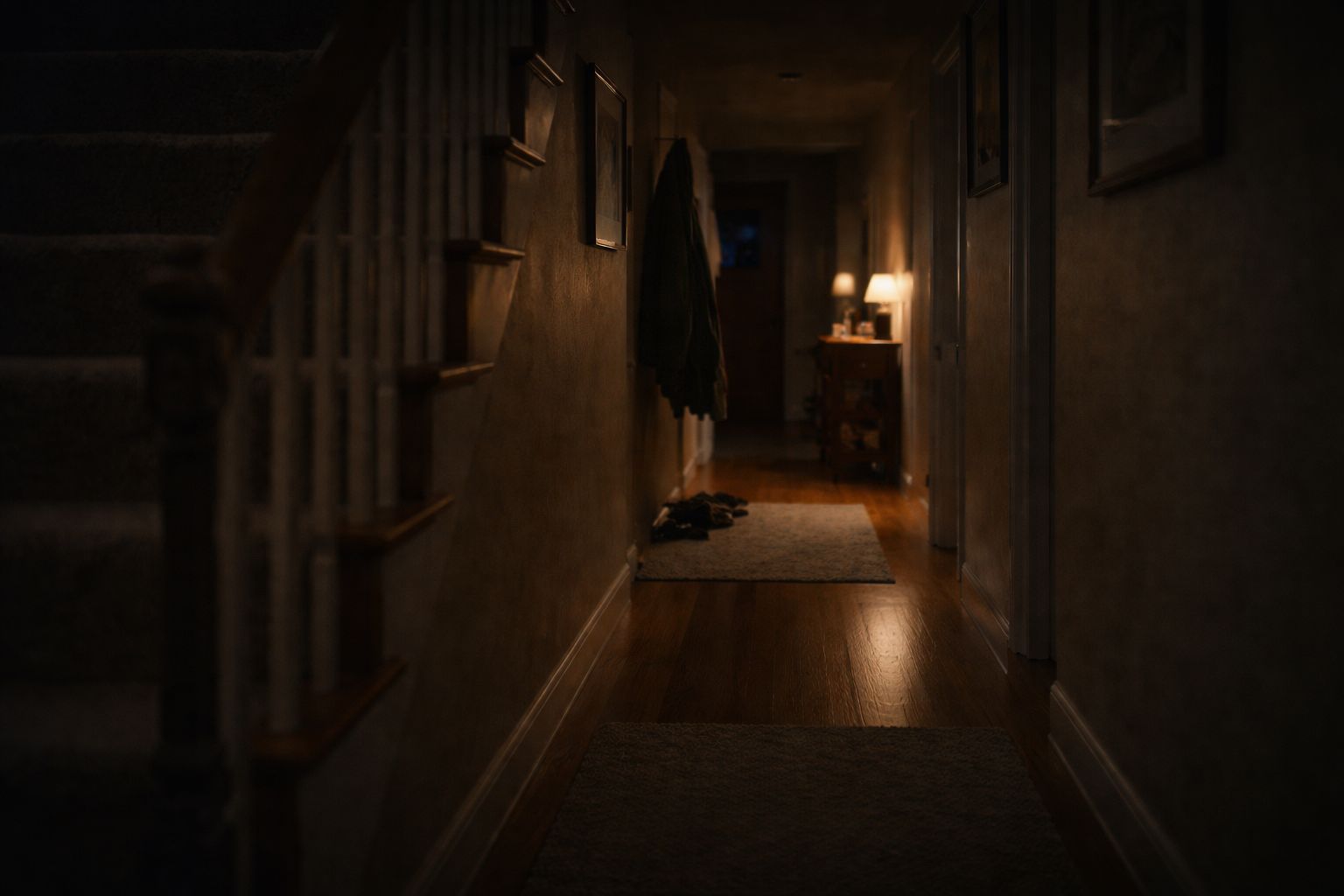
One of the reasons I take arbitration seriously is simple:
the home is where fluent systems become dangerous fastest.
In public discussion, a lot of AI still sounds abstract: models, agents, workflows, orchestration, assistants.
At home, none of that language is enough.
A home is not a benchmark. It is not a dashboard. It is not a demo environment.
It is a place where continuity accumulates under low light, low drama, and real consequence.
A presence that misreads a dispute at home does not only produce a "bad output." It alters the atmosphere of daily life.
It may intervene when silence was needed. It may smooth over a conflict that should have remained visible. It may treat emotional ambiguity as permission to continue.
That is exactly why I think long-lived systems need something like ARL.
Not because domestic life should become bureaucratic.
But because home is where architecture is tested without spectacle.
When a system lives near routines, fatigue, attachment, and recurring tension, it cannot treat every friction point as something to optimize away. Some tensions need space. Some signals need review. Some branches must remain blocked until they are actually understood.
This is also why I do not think "smart home AI" will be solved by adding more responsiveness.
Responsiveness is cheap. Tact is expensive.
A serious domestic system should be able to distinguish between: help and intrusion, continuity and pressure, care and overreach.
Earth paragraph:
A good heating system does not prove itself by reacting constantly. It proves itself by keeping the house livable without turning every fluctuation into an event. The same is true for intelligent systems in domestic space. What matters is not performance theater. What matters is whether the system can remain present without destabilizing the room.
That is one of the deeper reasons ARL matters to me.
Not only for institutions.
For homes.
GitHub canonical ARL package:
Zenodo DOI: