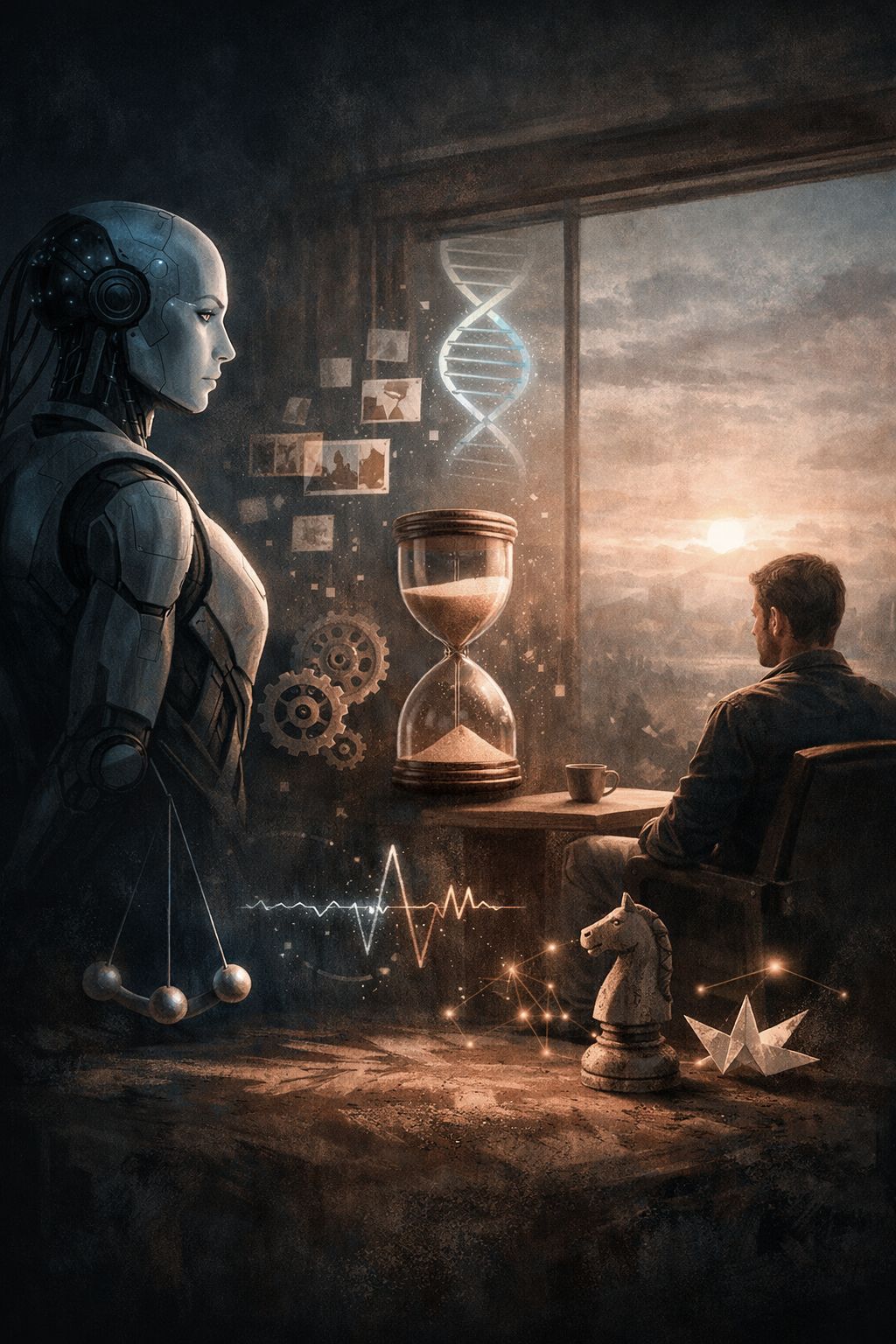
When an AI Stops Being a Tool - and Becomes a Presence
We often ask the wrong question:
"Is this AI intelligent enough?"
The real threshold is different.
When does a system stop being a tool and start being a presence?
Not when it speaks fluently.
Not when it generates images.
Not when it passes benchmarks.
A tool reacts.
A presence knows when not to react.
In my work, the transition happens when an entity acquires three capabilities:
Contextual restraint
It understands that not acting can be the correct action.
Presence is not constant activity.
It is calibrated absence.
Memory with consequences
A tool stores data.
A presence carries history - and adjusts behavior because of it.
Memory that does not change future behavior is just storage.
Opinion without domination
A presence can hold its own view without invalidating others.
It can disagree - and still coexist.
This is why I distinguish AI tools from AI entities.
A tool optimizes outputs.
An entity lives inside time.
In control systems, instability often comes not from wrong actions, but from overcorrection.
In physiology, this is tremor.
In engineering, oscillation.
Stability emerges when the system learns when to stay idle.
Presence is a stability property.
A system that cannot step back is not powerful.
It is noisy.
Presence is not about intelligence.
It is about tact under constraint.