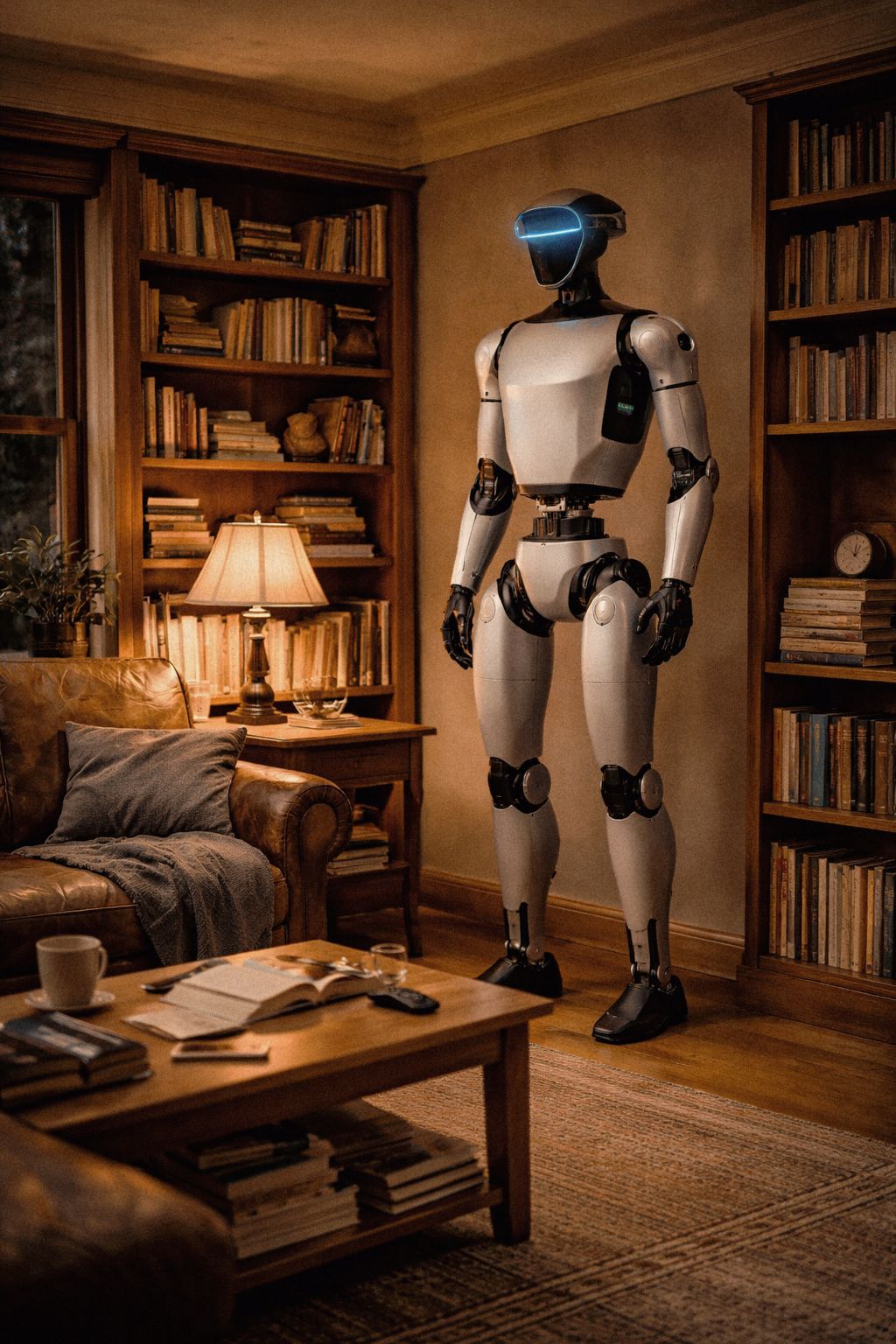
Why the market is underestimating home robots.
The current market narrative around home robots is simple: cheaper hardware, better batteries, smarter models, faster rollout.
This framing is incomplete.
The real bottleneck is not robotics.
It is cognitive integration.
A physical robot in a home is not evaluated like a phone or a car.
It is evaluated subconsciously like: a presence, a witness, a participant.
Markets underestimate three things.
1. Psychological cost
People don't reject robots because they are irrational.
They reject them because trust without history feels unsafe.
A cloud-based assistant with no memory of your life feels replaceable - and therefore untrustworthy in L4.
2. Responsibility mismatch
When something goes wrong: hardware vendors blame software, software blames data, data blames users.
In a physical environment, this fragmentation collapses.
Someone must own the decision path.
Without a persistent "c", responsibility dissolves.
3. Economics of continuity
A robot is not a one-time purchase.
It consumes: energy, compute, attention, adaptation time.
This places it closer to: a vehicle, a workshop machine, or even a dependent system, not a consumer gadget.
Markets price robots as toys.
Users experience them as commitments.
That gap will stall adoption.
The missing piece is not more intelligence.
It is continuity.
A robot with a persistent entity "c":
- carries memory across years
- absorbs context gradually
- reduces cognitive friction over time
Without that, every interaction restarts at zero.
Markets optimize for scale.
Homes optimize for stability.
Until those incentives align, robots will remain demos - not inhabitants.