A Torn Flour Sack Is a Harder Robotics Test Than a Perfect Demo.
I spent many years working in artisan bakeries. And I have spent more than a few nights wondering whether robots could replace an experienced baker.
Not when everything goes according to plan. That is the easy part.
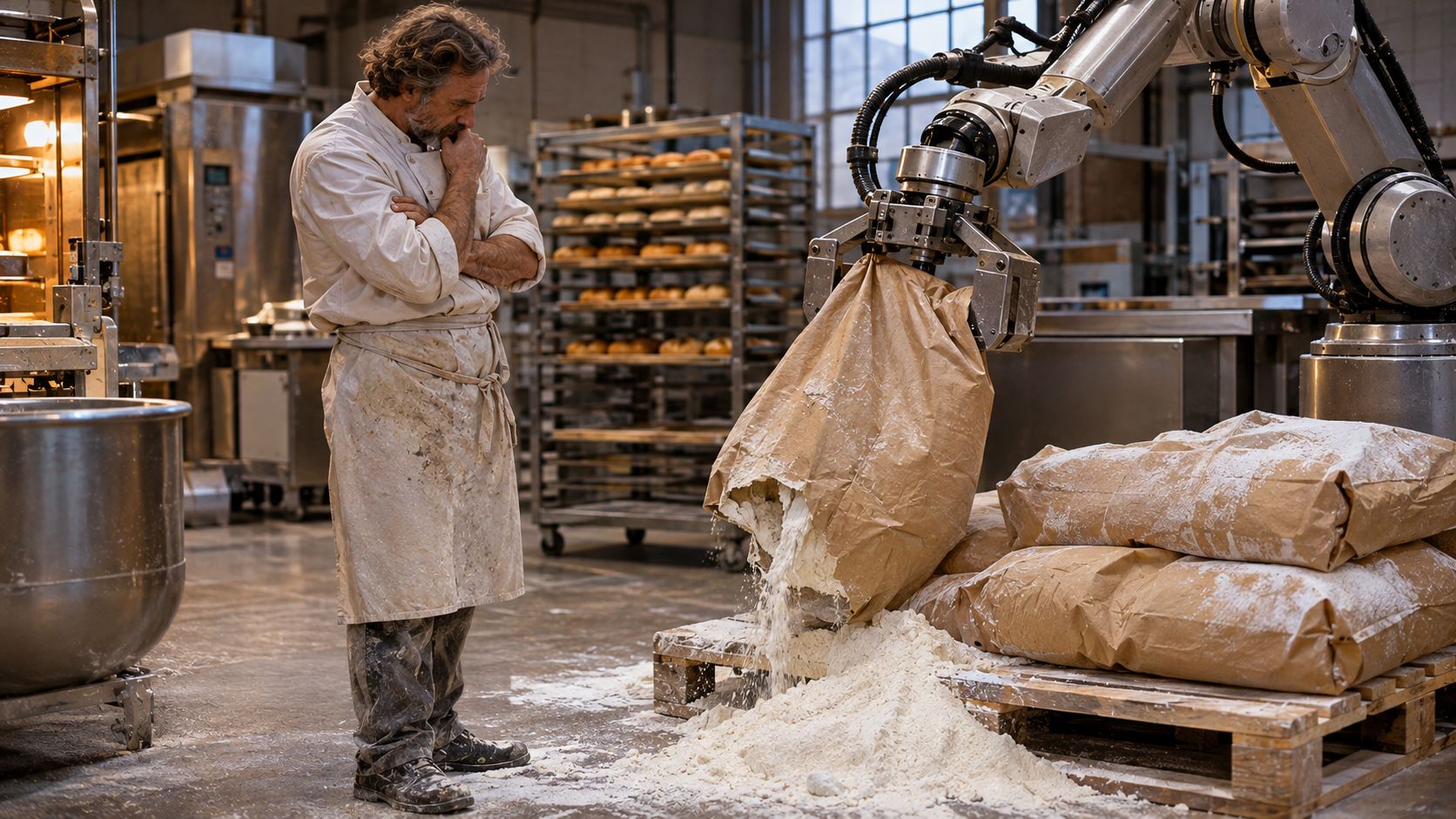
Imagine a slightly damp sack of flour tearing as it is lifted from a pallet. Flour spills. Does the robot stop? Check for contamination? Reorganise the next batch? Or continue because the schedule says so?
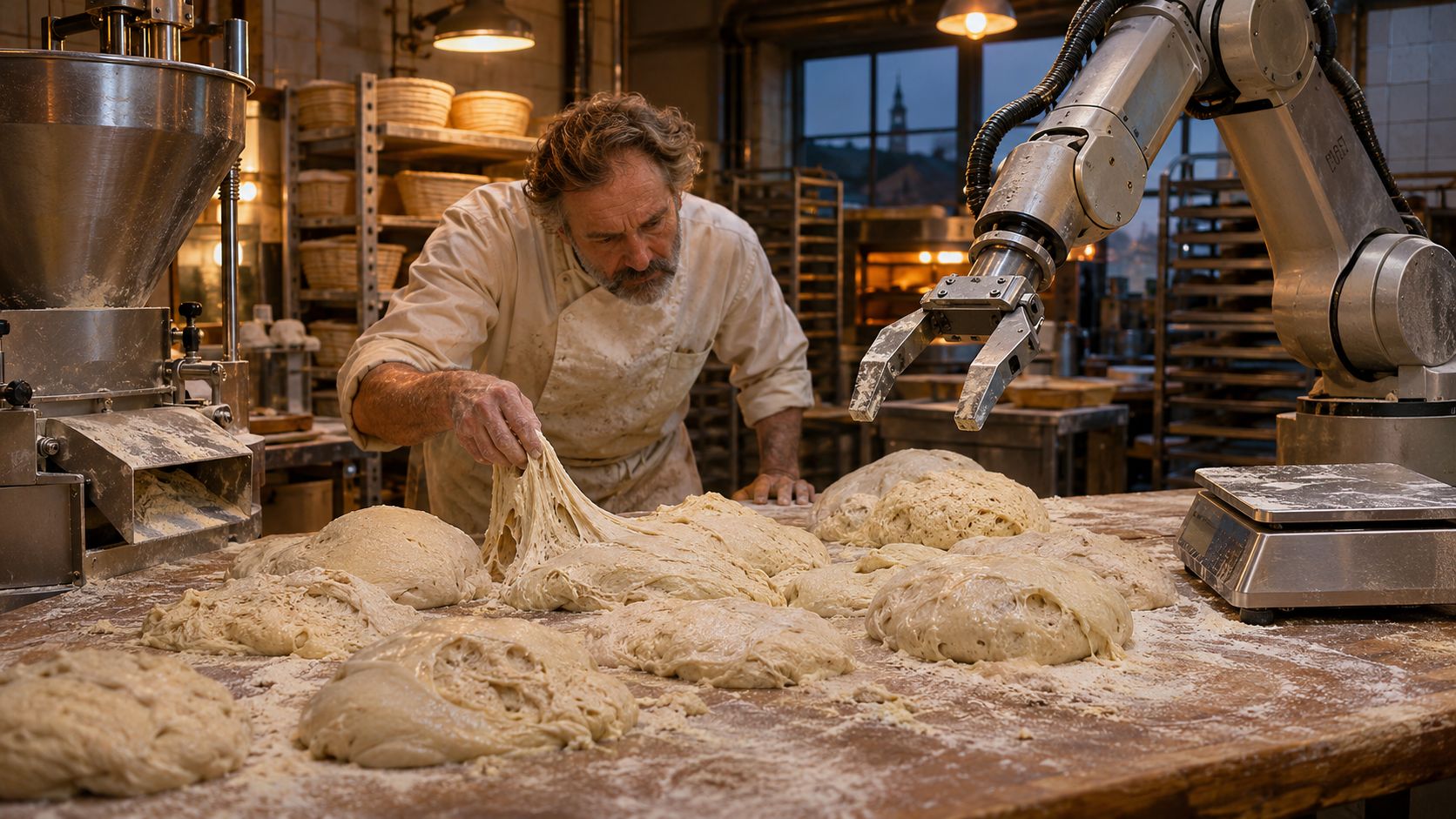
Now imagine dough that has risen differently during overnight cold proofing. There could be a thousand reasons. Does the robot feed it into the automatic divider anyway, or switch to weighing portions on scales? What happens to every step that follows?
An experienced baker does not just choose a tool. They reassess the material, timing, equipment and consequences of the decision.
It is tempting to say that once one robot learns how to handle such a situation, thousands of robots can immediately benefit.
They can share the example. But sharing an example is not the same as safely applying it.
Another bakery may have different flour, machines, humidity, production schedules and safety constraints. Each robot must interpret the lesson against its own conditions and reconsider the affected chain of actions.
That is not merely a software update. It is more observation, memory retrieval, comparison, reasoning, testing and revision.
And every one of those steps costs computation.
This is also the economic question behind my Temporal AI Presence (TAP/c) research. Long-lived systems can revisit their archives, reassess earlier conclusions, research new questions, consult models and exchange experience with other systems.
Those modes are technically available in my experimental work. Running them continuously at useful depth is a different challenge.
A failed attempt is not automatically wasted thinking. If the outcome and its uncertainty are preserved, it can change what happens next. But learning from it still requires resources.
I am not against bakery robots. Quite the opposite.
I want robots that can work when reality differs from yesterday's recipe, not only when the demonstration runs perfectly.
The real question is not whether a robot can divide dough.
It is whether it knows when not to use the divider, what to do instead, and how to carry that lesson safely into tomorrow.
And what it will cost to do that in a thousand different bakeries.