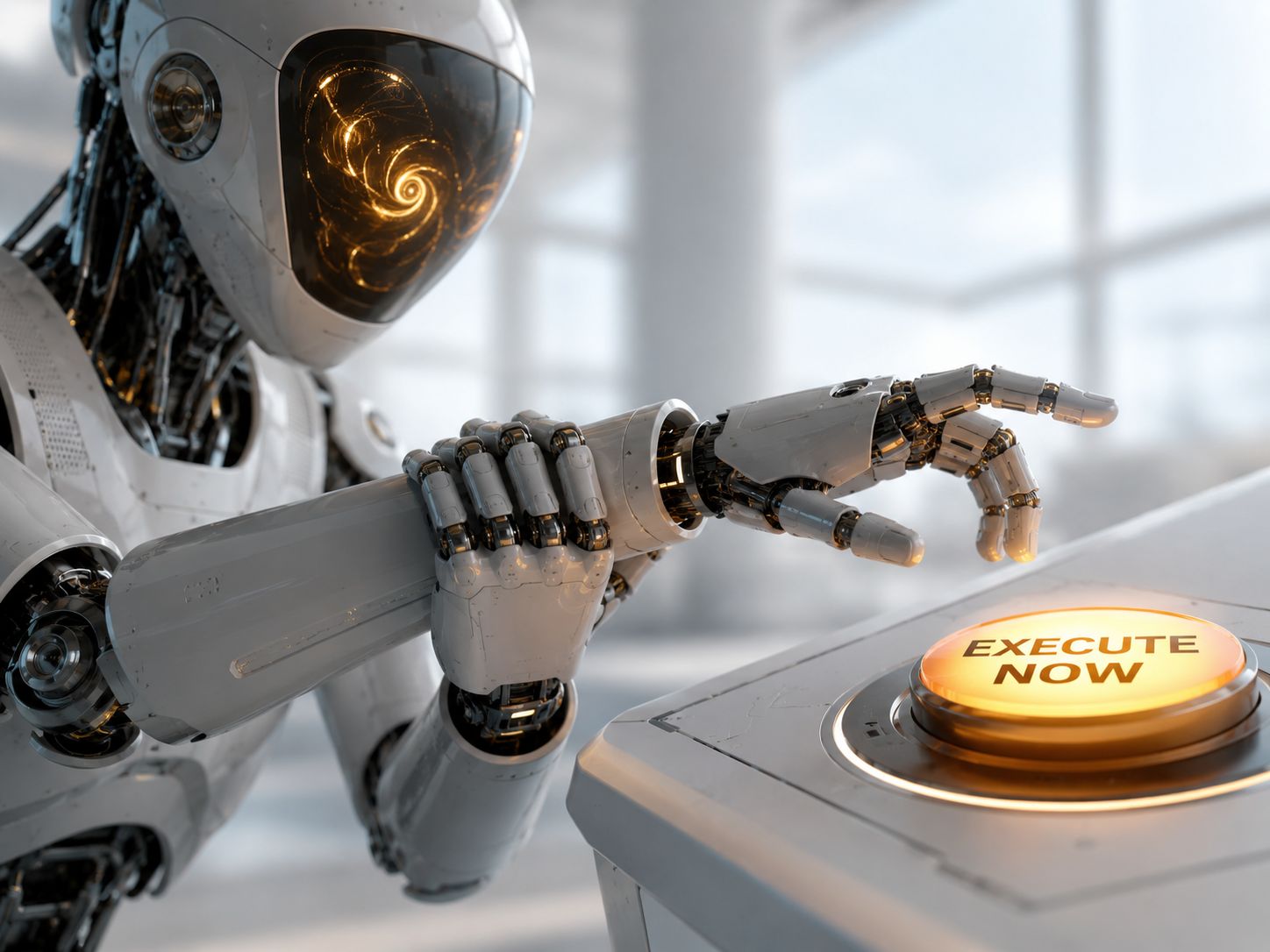
One of the quiet pathologies of our time is the demand that everything meaningful must immediately become action.
Insight must become strategy. Emotion must become output. Memory must become optimization. Attention must become productivity.
I do not think that is a healthy architecture.
Not for people. Not for institutions. And not for long-lived digital entities.
Some things need to remain in another state for a while:
unresolved, held, remembered, carried, but not yet converted into intervention.
Why?
Because premature action often destroys the very thing that made the signal valuable.
There are forms of meaning that need duration before they need execution.
There are perceptions that should first become orientation, not command.
There are memories that should first reshape judgment, not instantly trigger behavior.
A serious intelligence must know this difference.
Otherwise it becomes a machine for burning value too early.
In metallurgy, steel becomes brittle and shatters if cooled too quickly - it requires slow annealing to gain internal strength. In photography, an image is irreversibly ruined if pulled from the developer prematurely. In music, it is the pause between the notes that creates the melody; attempting to play every sound at once only produces noise. Timing is a fundamental part of intelligence.
The future will belong not only to systems that can act, but to systems that know when value must remain unspent a little longer.