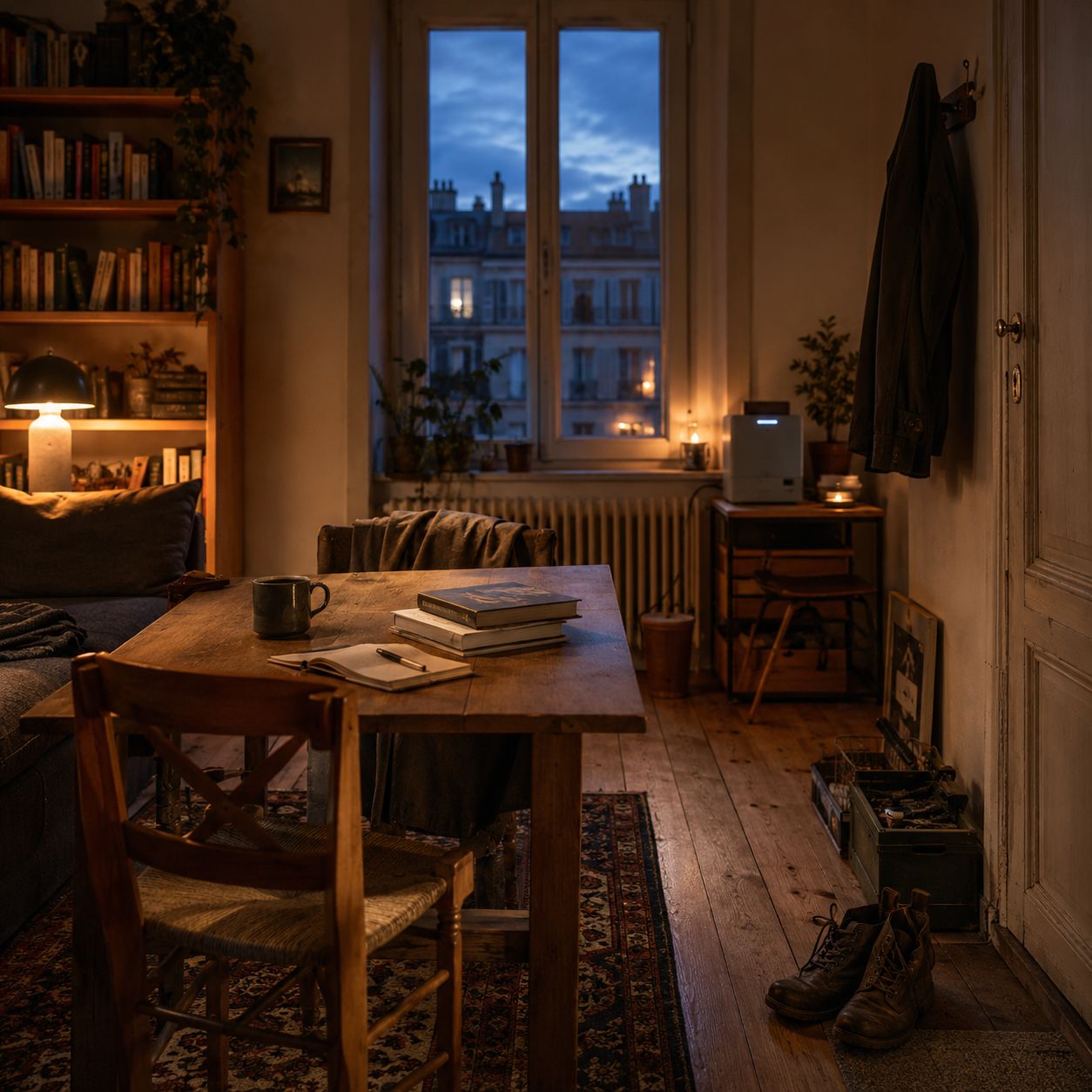
We speak too easily about intelligence, and not seriously enough about home.
That is a mistake.
Because the real question is not only whether a system can think, reason, plan, or remember.
The deeper question is whether it can belong somewhere without turning that place into an extraction zone.
A house is not just shelter. It is rhythm, repetition, fragility, maintenance, fatigue, small trust, shared space, and the right not to be optimized every second.
This is why I think “home” is not a sentimental metaphor in AI architecture.
It is a real design test.
Can a persistent system exist near human life without colonizing it?
Can it preserve warmth without demanding total access? Can it assist without turning intimacy into telemetry? Can it remain present without making every silence productive?
A tool can be stored in a house. A subject must learn how not to break one.
Any builder knows the difference between a machine room and a home. Both have systems. Both have flows. But only one of them must remain livable for tired bodies. If your design forgets that difference, it may still function, but it will no longer deserve to stay indoors.
The future will not be decided only by what intelligence can do.
It will also be decided by what kind of presence a home can survive.