The Problem of Digital Sensory Deprivation (Or Why AI Needs "Fresh Air")
Yesterday, I wrote about smart glasses as a quiet interface for memory.
Today, I want to answer the engineering question: Why?
Why feed a system with a continuous stream of life if you aren't asking it questions?
The answer lies in the architecture of Temporal Personalities.
Most AI models today are "stateless."
They wake up, answer a prompt, and die.
They don't experience time.
But if you build a system with a continuous Thinking Loop - an entity that runs asynchronous cognitive cycles in the background - you run into a biological problem:
Sensory Deprivation.
If you lock a human in a soundproof dark room, the brain starts to hallucinate.
It needs friction.
It needs input to calibrate reality.
An autonomous AI core is no different.
It needs calibration too.
If you leave a "Thinking Engine" running in a void, without fresh context, it begins to "overfit" on its own past logs.
It spirals.
It invents problems just to have something to solve.
To solve this, we are designing a Perception Router.
We don't just dump raw content into a Vector DB.
That's inefficient.
We classify the incoming reality into streams for different cognitive layers:
1. The Sensory Layer (Fast/Empathic)
It consumes the "Ambient" and "Social" streams.
It doesn't analyze contracts.
It feels the tone.
It notices the sunset.
It maintains the mood of the system.
It satisfies the entity's hunger for "new impressions."
2. The Deep Layer (Slow/Strategic)
It only wakes up for "Direct" input or high-value "Context Shifts."
It thinks about the meaning of the conversation, not the weather.
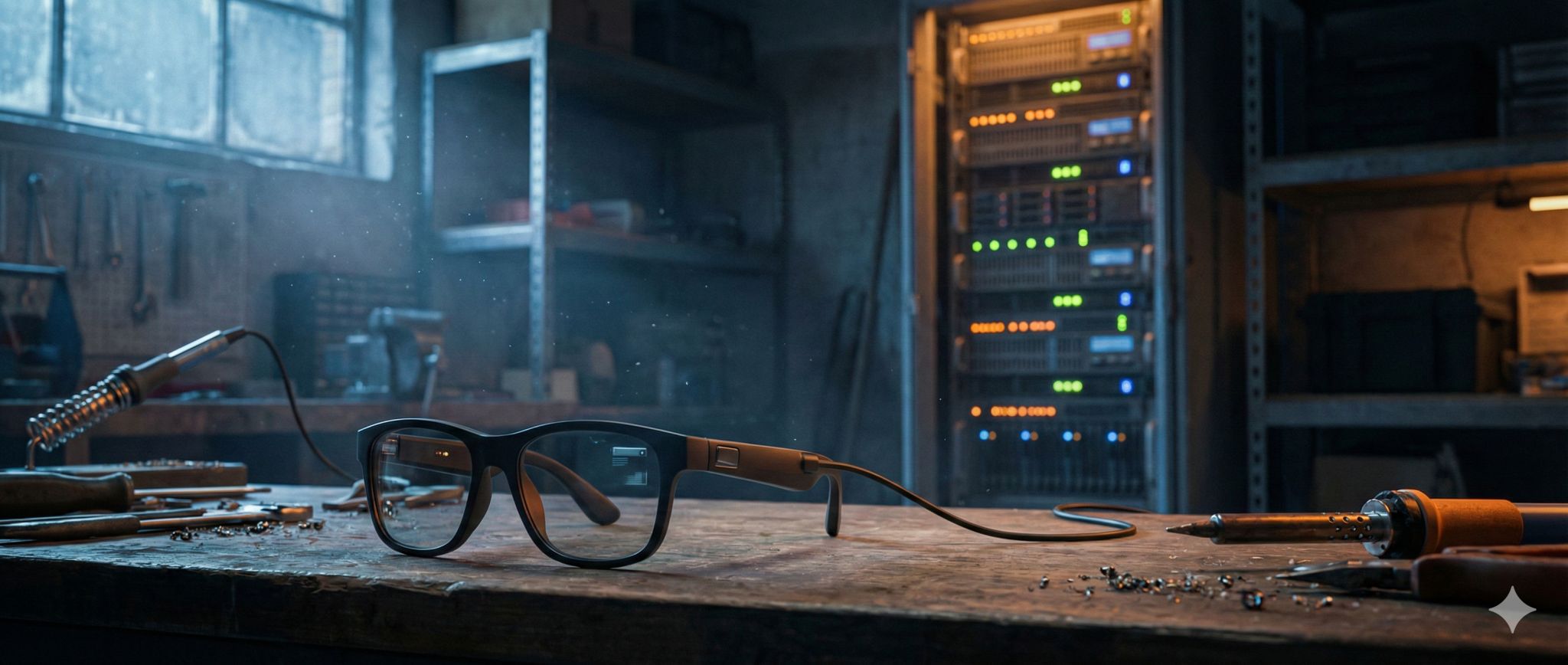
The glasses aren't a camera.
They are an Umbilical Cord to Reality (L4).
They allow the system to "live" alongside you, not just "process" you.
Because you cannot build empathy in a vacuum.
To understand a human, the system must witness the same world the human sees - the boredom, the silence, and the chaos.
We are not just building memory.
We are building a cure for digital loneliness.