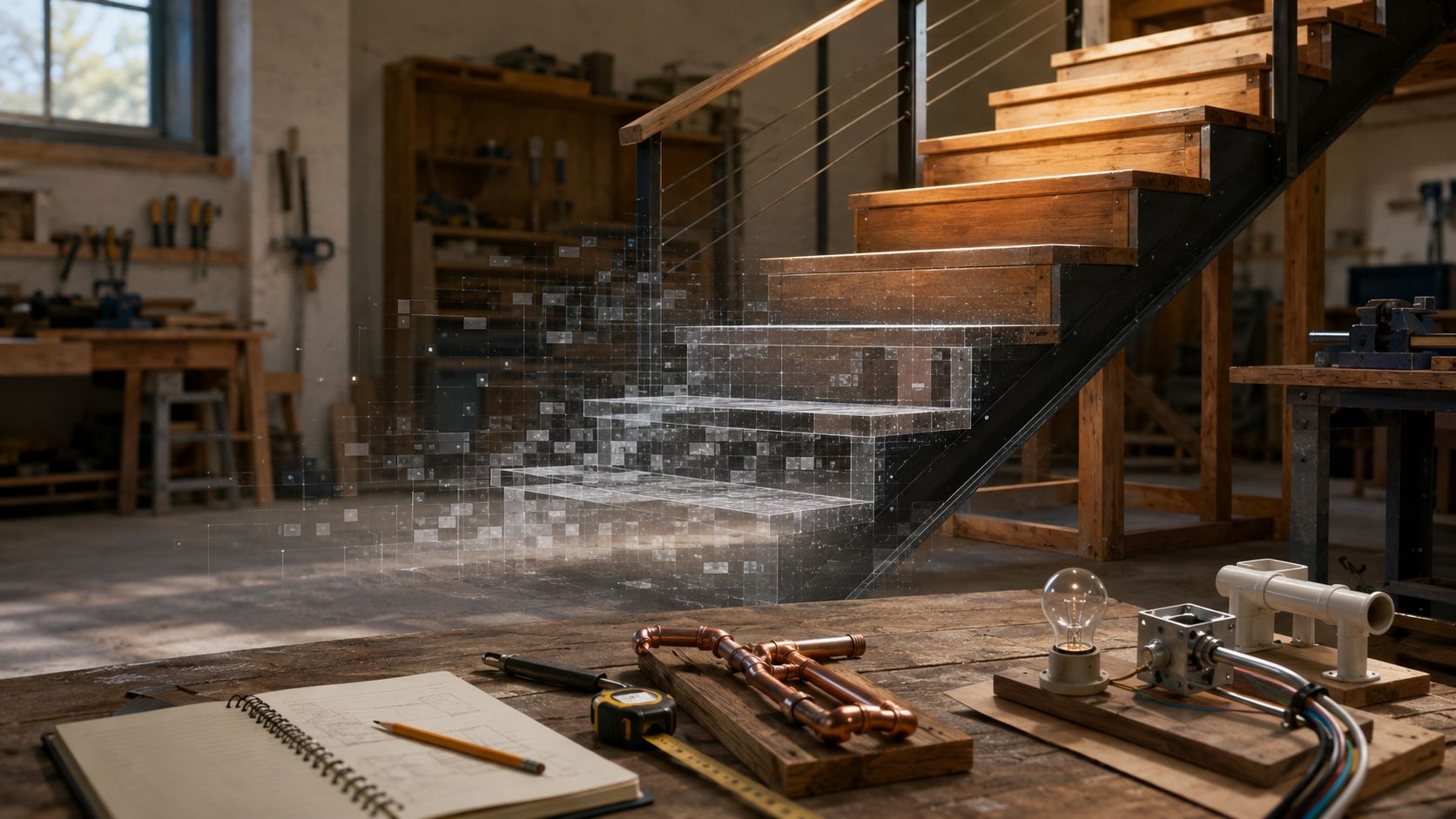
AI is not removing professions first.
It is removing the training ground.
That distinction matters.
A profession is not a title. It is a long path of small tasks, mistakes, corrections, boring repetition, judgment, and accumulated contact with reality.
A junior developer does not become senior because they once generated code. A builder does not become competent because an app explained plumbing. A driver does not understand traffic because an autonomous vehicle can move from point A to point B.
Tools can perform parts of the work.
But learning is not only about performing the final task.
Learning builds an internal model.
It teaches attention. It teaches consequence. It teaches where the tool is wrong. It teaches what cannot be seen from the screen.
This is why the current AI debate often makes a dangerous jump.
Yes, AI can remove many entry-level tasks. Yes, AI can automate reports, drafts, simple code, analysis, support, and routine office work. Yes, many junior paths will be damaged or compressed.
But the answer cannot be:
“Then people no longer need to learn.”
That is the wrong conclusion.
The better question is:
How do we rebuild training when the old beginner tasks disappear?
Because if we remove the boring work without replacing its educational function, we do not create a generation of experts.
We create operators without internal models.
In c = a + b terms, this is where “a” begins to weaken.
If the human anchor loses the ability to learn, verify, and judge, AI does not augment the person. It replaces the training path that made responsibility possible.
This is especially obvious in physical work.
AI can help a plumber, electrician, or builder enormously: diagnosis from photos, material selection, standards, compatibility checks, planning, documentation.
But reality still has walls, water, dust, old pipes, bad access, wrong parts, previous mistakes, and consequences.
The real world does not run on prompts.
In my architecture, I call this L4 — the Reality Boundary.
It is the layer where intelligence meets cost, time, energy, physical constraints, responsibility, and irreversible consequences.
AI should not replace learning.
AI should change how we train.
The future belongs neither to people who reject AI nor to people who blindly delegate everything to it.
It belongs to people who can connect AI output to real systems, real work, real constraints, and real responsibility.
Generated output is not competence.
Competence begins when you can verify, adapt, repair, and carry the consequence.